
Did you know that freezing bacon can extend its shelf life significantly while preserving its flavor and texture? For many bacon lovers, ensuring that this beloved breakfast staple remains fresh and ready to use is essential. Properly storing bacon in the freezer not only helps prevent waste but also allows you to enjoy its savory goodness at any time.
Understanding how long bacon lasts in the freezer is crucial for maintaining food safety and quality. Whether you buy in bulk or have leftovers, knowing the right freezing techniques and timeframes ensures you can savor every crispy bite without the worry of spoilage. Dive into our guide to discover the best practices for freezing bacon to keep it delicious and ready for your next meal.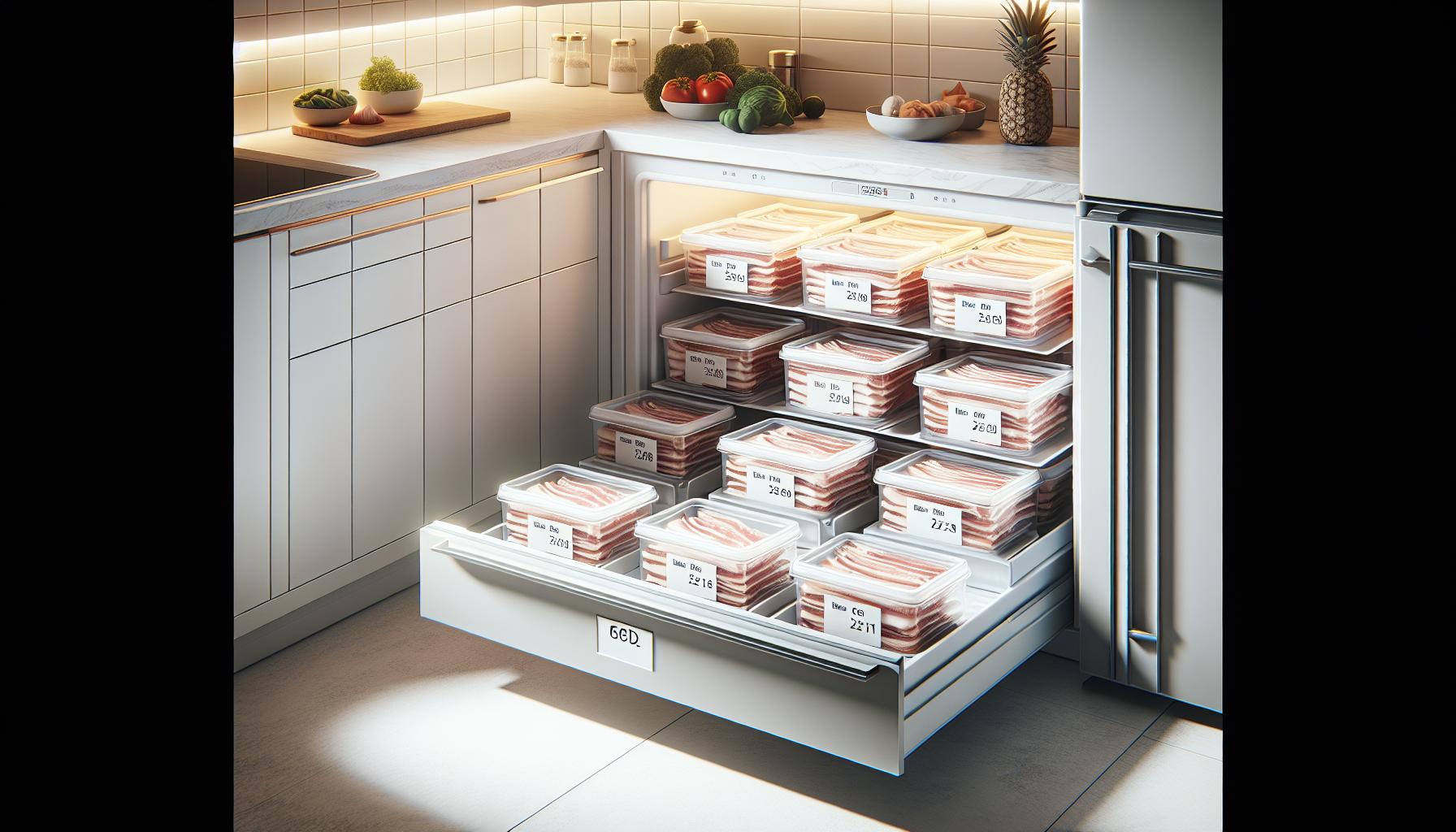
How Long Can You Freeze Bacon?
Freezing bacon is an excellent way to extend its freshness and ensure you always have this delicious food on hand. Generally, uncooked bacon maintains its best quality for up to six months when stored in the freezer. It’s important to package it correctly to prevent freezer burn, which can affect taste and texture. Simply keep the original packaging for unopened bacon; however, if the package is opened, wrap it tightly in heavy-duty foil or a freezer-safe bag, ensuring that as much air as possible is removed.
For cooked bacon, the storage duration is slightly shorter. It can last about four to six months in the freezer without a significant loss in flavor or quality. When freezing cooked bacon, allow it to cool completely, then store it in an airtight container or freezer-safe bag.
Factors Influencing Storage Duration
Some factors that can influence the freshness duration include:
- Freezer Temperature: Maintaining a consistent temperature at or below 0°F is crucial for prolonging shelf life.
- Packaging Method: Proper wrapping and sealing techniques play a pivotal role in avoiding freezer burn.
- Bacon Type: Different types of bacon (e.g., turkey, thick-cut, regular) can have varying freezing durations.
By understanding these factors, you can make informed decisions about how long to freeze your bacon while preserving its best qualities.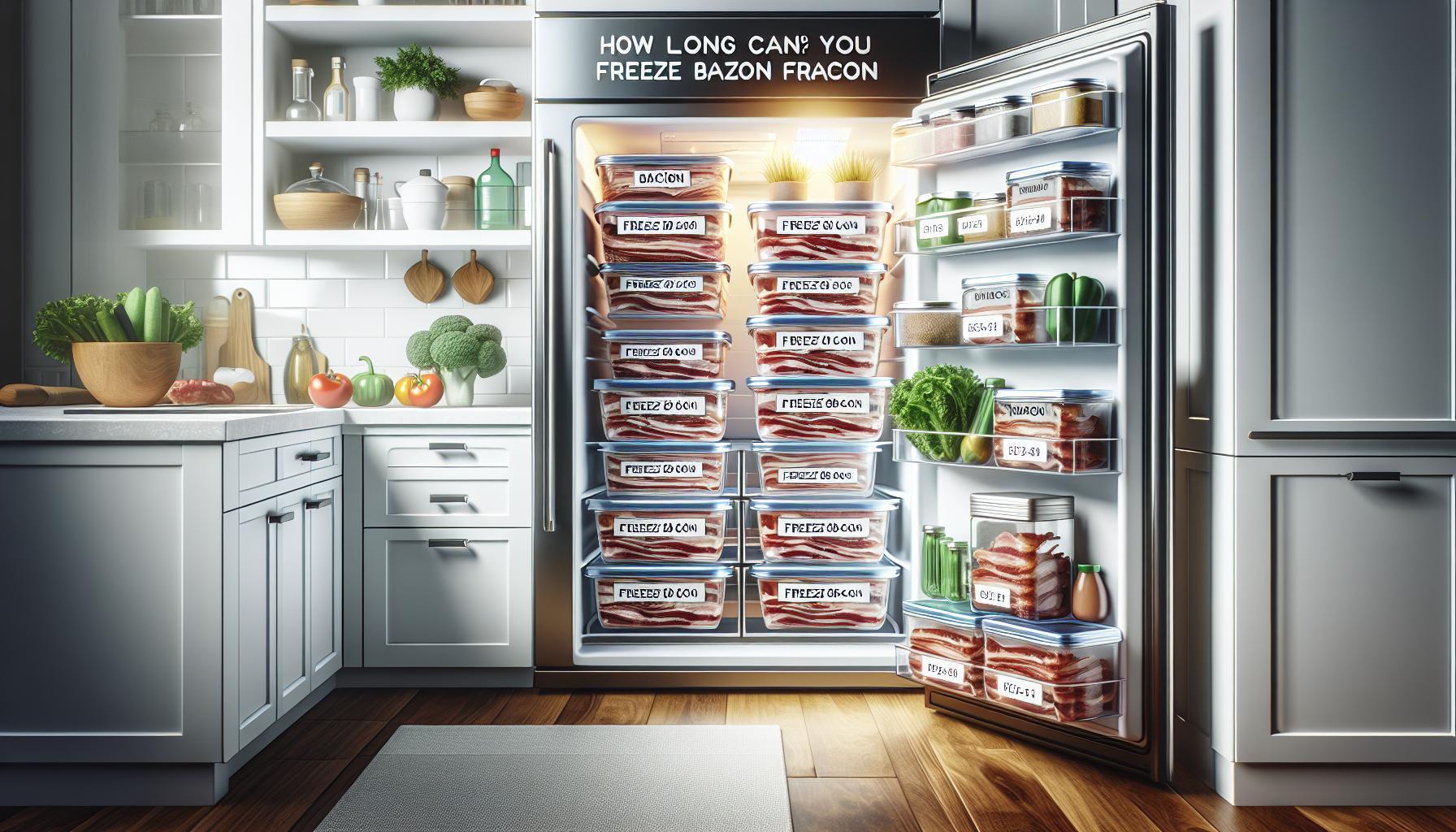
Best Practices for Freezing Bacon
Freezing bacon can be a game-changer in maintaining its flavor and texture for extended periods, but doing it correctly is crucial to yield the best results. To ensure that your bacon remains as fresh as possible while frozen, start with proper packaging. If you have unopened bacon, it’s ideal to leave it in its original packaging. This packaging is designed to prevent air from entering, which is essential for avoiding freezer burn. For those who need to open a package, rewrap the bacon tightly in heavy-duty aluminum foil or place it in a freezer-safe resealable bag. Squeeze out as much air as possible before sealing the bag to create a barrier against both freezer burn and odors from other frozen foods.
- Cut and Portion: Consider slicing the bacon into individual or smaller portions. This not only makes it easier to thaw only what you need but also allows for quicker freezing, minimizing ice crystal formation.
- Immediate Freezing: As soon as the bacon is wrapped securely, place it in the coldest part of your freezer. Rapid freezing prevents the formation of large ice crystals, which can rupture the cell walls of the bacon, leading to a loss of texture and flavor.
- Labeling: Don’t forget to label the packaging with the freezing date. Bacon can generally last up to six months in the freezer; knowing when you froze it helps you keep track of its freshness.
By following these best practices, you can enjoy the convenience of having bacon ready to go while preserving its delightful taste and texture. Remember, when you’re ready to cook, you’ll want to thaw the bacon safely in the refrigerator or microwave to maintain its quality. Properly frozen bacon is a delicious solution for busy days or spontaneous meals!
Thawing Bacon Safely: Key Tips
To preserve the flavor and texture of bacon, careful thawing is essential. The safest and most effective way to thaw bacon is to plan ahead and use the refrigerator. By placing the wrapped bacon in the fridge, it can thaw gradually over several hours or overnight, ensuring that it remains at a safe temperature. This method prevents the growth of harmful bacteria and helps retain the quality of the meat.
If you’re short on time, the microwave offers a quick alternative. Use the defrost setting, checking the bacon every 30 seconds to avoid cooking it inadvertently. Place the bacon on a microwave-safe plate and cover it loosely with a paper towel to prevent messes. Although this method is faster, be aware that uneven thawing can occur, so it’s recommended for immediate use rather than long-term storage.
For those who find themselves in a pinch, it is safe to cook bacon straight from frozen. Simply add a few extra minutes to your cooking time, and enjoy the delicious results without worrying about thawing. However, this method is best used when you have no other options.
Key Tips for Thawing Bacon Safely:
- Refrigerator Method: The safest option; allows gradual thawing and keeps bacon at a safe temperature.
- Microwave Method: Use the defrost setting to thaw quickly, monitoring frequently to avoid cooking the bacon.
- Cooking Frozen Bacon: It’s perfectly safe to cook bacon directly from the freezer if you need it quickly.
By following these tips, you can ensure your bacon remains delicious and safe to eat, maintaining the enjoyment of this popular staple in your meals.
Identifying Freshness: Signs of Spoilage
Bacon is beloved for its rich flavor, but ensuring its freshness is crucial for both taste and safety. Spoilage can happen subtly, and it’s important to recognize the signs so you can enjoy your bacon at its best. When examining stored bacon, look for distinct indicators of spoilage, particularly if it has been frozen. Bacon stored properly can last up to six to eight months in the freezer, but once thawed, it’s vital to check for freshness.
One of the primary signs that bacon has spoiled is a change in color. Fresh bacon should have a rosy or reddish hue, while spoiled bacon may appear gray or brownish. Additionally, if you notice any excessive browning or a dull appearance, it’s a red flag. Another important factor is the aroma; fresh bacon should smell smoky and savory. If the bacon emits a sour or rancid odor, it’s time to discard it.
Texture is also a crucial indicator of freshness. When assessing your bacon, it should feel slightly moist but not slimy to the touch. If it feels sticky or slimy, this is a strong indication of bacterial growth, and you should avoid consuming it. Lastly, check for any unusual packaging-if the packaging is swollen or damaged, it could mean that the bacon is no longer safe to eat.
By staying vigilant about these signs and following proper storage techniques, you can enjoy delicious and safe bacon every time you reach for it, ensuring it enhances your meals rather than compromising your health.
Can You Refreeze Bacon? What to Know
Once a package of bacon has been thawed, many wonder if it’s safe to refreeze it. The good news is that you can refreeze bacon; however, there are some important considerations to keep in mind to maintain both safety and quality. Refreezing bacon is possible if it was thawed in the refrigerator and not left out at room temperature for more than two hours. This is crucial because bacteria can grow rapidly at room temperature, thus compromising food safety.
When you choose to refreeze bacon, remember that each freeze-thaw cycle can diminish the quality of the meat. Although refrozen bacon is safe to eat, its texture and flavor may suffer because repeated freezing can cause moisture loss and lead to freezer burn. To minimize these effects, ensure that the bacon is tightly wrapped in plastic wrap or aluminum foil, and consider placing it in an airtight freezer bag. This extra layer of protection will help maintain its flavor and texture during storage.
It’s best to consume refrozen bacon within a few months. While it can technically stay safe indefinitely in the freezer, the USDA recommends using the bacon within 1 to 2 months for optimal taste and quality. When you’re ready to use the refrozen bacon, make sure to thaw it properly-preferably in the refrigerator, where it will stay at a safe temperature before cooking. Following these guidelines will allow you to enjoy your bacon without compromising on safety or flavor.
Storage Tips for Cooked Bacon
Cooked bacon offers convenience and an irresistible savory flavor, making it a favorite for many. However, to preserve its quality and safety, proper storage is key. When storing cooked bacon, your primary goal should be to maintain its deliciousness while preventing spoilage. Cooked bacon can be safely stored in the refrigerator for up to one week if properly handled.
To store cooked bacon, allow it to cool to room temperature and then place it in an airtight container or a resealable plastic bag. This helps prevent exposure to air, which can cause the bacon to dry out and lose flavor. If you prefer, you can also wrap the bacon tightly in aluminum foil or plastic wrap before placing it in a container. Label the packaging with the date to keep track of freshness.
If you want to save cooked bacon for longer periods, freezing is an excellent option. Cooked bacon can last in the freezer for about one month while maintaining best quality. To freeze, lay the bacon strips on a baking sheet in a single layer, freeze until solid, and then transfer them to a freezer bag or airtight container. This method prevents the strips from sticking together, allowing you to take out only what you need without defrosting the entire batch.
When reheating cooked bacon, ensure it’s heated to at least 165°F to restore its safety and flavor. Use a skillet, microwave, or oven to quickly reheat. Following these storage tips will ensure you can enjoy the rich taste of cooked bacon over several meals without compromising on quality or safety.
The Ideal Freezer Temperature for Bacon
To ensure that bacon maintains its flavor and texture during freezing, it’s crucial to establish the correct freezer temperature. The ideal temperature for freezing bacon, and meat in general, is set at or below 0°F (-18°C). At this temperature, the growth of bacteria and spoilage is halted, allowing your bacon to last longer without compromising its quality.
Maintaining a consistent freezer temperature is equally important. Fluctuations can lead to partial thawing and refreezing, which can degrade the bacon’s flavor and texture due to freezer burn. To monitor the temperature effectively, consider using an appliance thermometer that can help you track conditions within your freezer and ensure they remain stable.
In addition to setting the appropriate temperature, proper packaging techniques play a vital role in preserving the integrity of your bacon. Utilize vacuum sealing or airtight freezer bags to minimize air exposure. This method not only safeguards against freezer burn but also helps keep the bacon fresher for a longer period. Remember, bacon can typically be stored in the freezer for about 1 to 2 months for best quality, although it may remain safe beyond this timeframe if kept at proper temperatures, as long as it is well-packaged and stored correctly.
Long-Term Storage: Bacon Varieties and Lifespan
Different types of bacon can have varying lifespans in the freezer, which is essential to consider for maintaining the best quality. Generally, bacon can be safely frozen for up to 6 months without significant loss of flavor or texture. However, some specific types of bacon may have unique characteristics that affect their longevity.
Varieties of Bacon and Their Storage
- Traditional Pork Bacon: This type typically lasts up to 6 months in the freezer. Ensure it is tightly wrapped or vacuum sealed to prevent freezer burn.
- Turkey Bacon: Slightly more prone to drying out, turkey bacon can also be stored in the freezer for up to 6 months but might benefit from vacuum sealing for optimal freshness.
- Veggie Bacon: Meatless alternatives generally have a shorter shelf life and are best consumed within 4 months of freezing.
- Smoked Bacon: The smoking process can help enhance its preservation, allowing it to remain in the freezer for up to 6 months, but ensure it’s well-wrapped to maintain quality.
Packaging Tips for Maximum Freshness
To maintain quality during freezing, proper packaging is critical. Use freezer-specific bags or a vacuum sealer to limit air exposure, which is the main culprit of freezer burn. If using traditional freezer bags, be sure to squeeze out as much air as possible before sealing. It’s advisable to divide larger packages into smaller portions, making it easier to thaw only what you need.
When freezing bacon, always label the packaging with the date of freezing and the type of bacon. This practice not only helps in keeping track of its age but also aids in meal planning. Remember, while frozen bacon remains safe to eat beyond these recommended time frames, its quality will gradually diminish. Regularly using these storage practices will ensure that every slice of bacon you thaw is just as delicious as the day it was frozen.
Health and Safety: Avoiding Freezer Burn
Properly storing bacon in the freezer is essential to maintain its flavor and quality, but one common issue that can compromise your bacon is freezer burn. Freezer burn occurs when air comes into contact with food, leading to dehydration and oxidation. This can negatively impact both the taste and texture of bacon, leaving it dry and unappetizing, even if it is still safe to eat. To prevent this, the key is effective packaging and minimizing air exposure.
Start by using freezer-safe packaging. Freezer bags are a good option, but for the best results, consider using a vacuum sealer. A vacuum sealer removes air from the packaging, creating a tight seal that helps prevent freezer burn. If vacuum sealing isn’t available, squeeze as much air out of traditional freezer bags as possible before sealing them. Wrapping bacon in plastic wrap or aluminum foil before placing it in a freezer bag can provide an additional layer of protection against air exposure.
It’s also wise to portion control your bacon when freezing. By slicing it into smaller servings, you only need to thaw what you plan to use, reducing the chances of re-freezing any leftovers, which can further degrade quality. Always label your packages with the date of freezing and the type of bacon to streamline your meal preparation and management. Remember, while bacon can be safe to consume beyond the recommended 6 months in the freezer, being proactive about storage will ensure that each slice you thaw reveals the fresh, delicious flavor you expect.
Bacon Recipe Ideas After Freezing
Cooking with frozen bacon can be a game-changer in your kitchen, turning an impromptu meal into a savory masterpiece. Interestingly, frozen bacon doesn’t lose much in terms of flavor or texture when stored correctly, and it can be the star ingredient in various quick and delicious dishes. Whether you’re throwing it into a hearty breakfast scramble or folding it into a delicious pasta, the flexibility of using frozen bacon opens many culinary possibilities. Here are some fantastic recipe ideas that showcase the versatility of this beloved ingredient after freezing.
Breakfast Classics
Bacon’s rich, smoky flavor elevates traditional breakfast dishes. Try using frozen bacon in:
- Bacon and Egg Breakfast Burritos: Cook your thawed bacon until crispy, chop it up, and mix it with scrambled eggs and cheese. Wrap it in a tortilla for a satisfying breakfast on the go.
- Classic BLT Sandwich: Once your bacon is thawed and fried to perfection, layer it with lettuce and ripe tomatoes on toasted bread for a timeless lunchtime favorite.
- Pancakes with Bacon: Why not combine both? Cook bacon until crispy, crumble it, and sprinkle it into your pancake batter for a sweet and savory twist.
Hearty Dinners
Frozen bacon can easily jazz up your dinner table. Consider:
- Bacon-Wrapped Chicken: Thaw your bacon and use it to wrap chicken breasts before baking. The bacon will impart incredible flavor while keeping the meat juicy.
- Pasta Carbonara: Use your thawed bacon to create a rich pasta dish. Sauté the bacon until crispy, then toss it with cooked pasta, beaten eggs, and Parmesan cheese for a creamy finish.
- Soups and Stews: Add depth to your favorite soup or stew by cooking thawed bacon as a base. It complements vegetable soups and hearty chowders wonderfully.
Snacks and Appetizers
Frozen bacon is also great for party-ready snacks. Here are a few ideas:
- Bacon-Wrapped Asparagus: Thaw and wrap bacon around asparagus spears, brush with olive oil, and grill or roast for a savory appetizer.
- Bacon Jalapeño Poppers: Fill halved jalapeños with cream cheese, wrap with thawed bacon, and bake for a spicy treat.
- Bacon and Cheese Stuffed Mushrooms: Combine thawed, chopped bacon with cream cheese and herbs, stuff into mushroom caps, and bake until golden.
By embracing these recipes, you can transform your frozen bacon into mouthwatering dishes that are sure to please. Remember that proper thawing is crucial for maintaining texture; consider thawing in the fridge overnight or using a microwave for quicker preparation. Enjoy your cooking adventures!
How to Store Leftover Cooked Bacon
Leftover cooked bacon can be a delicious addition to many meals, but proper storage is essential to maintain its quality and safety. When you find yourself with extra bacon after a meal, the way you store it can keep it fresh and tasty for your next culinary adventure. Ensuring that your bacon is stored correctly can make all the difference, not only in flavor but also in food safety.
Start by allowing the cooked bacon to cool to room temperature before storage; this helps to prevent condensation and moisture from building up in your storage container, which can lead to spoilage. Once cooled, it’s best to store the bacon in an airtight container or wrap it tightly in aluminum foil or plastic wrap. This will keep out air and excess moisture, which can cause the bacon to lose its desirable texture. Additionally, consider placing parchment paper between layers of bacon if stacking, as it helps prevent sticking.
Cooked bacon can be stored in the refrigerator for up to one week, making it a convenient option for meal prepping or for adding to recipes throughout the week. If you want to extend its life further, consider freezing the bacon. Wrapped tightly in freezer-safe packaging, cooked bacon can retain its quality for up to six months in the freezer. When you’re ready to use it, simply thaw it in the fridge overnight or reheat it straight from frozen, making sure it reaches an internal temperature of 165°F to ensure food safety.
In summary, with these simple steps and proper attention to storage methods, leftover cooked bacon can remain a versatile and delicious ingredient that enhances your meals. Whether you’re adding it to salads, quiches, or breakfast dishes, maintaining its quality through thoughtful storage will keep your dishes vibrant and satisfying.
Q&A
Q: How long can I keep bacon in the freezer for best quality?
A: Bacon can last up to 6-12 months in the freezer for optimal quality. To maintain freshness, ensure it is tightly wrapped or sealed in an airtight container. This prevents freezer burn and helps preserve its flavor and texture.
Q: Does freezing bacon affect its taste or texture?
A: Freezing bacon may slightly alter its taste and texture, but if stored properly, it should remain relatively close to its original state. For best results, wrap bacon tightly to minimize air exposure, preventing freezer burn.
Q: How can I tell if frozen bacon is bad?
A: Signs of spoiled frozen bacon include a change in color (dull or grey), unusual smell, and ice crystals or freezer burn. If these signs are present, it’s safer to discard the bacon to avoid foodborne illness.
Q: Is it safe to eat bacon that has been frozen for over a year?
A: While bacon can be safe to eat after a year in the freezer, quality may suffer. If you notice off smells or discoloration upon thawing, it’s best to discard it. For best flavor, aim to use it within 6-12 months.
Q: What is the best way to thaw bacon after freezing?
A: The safest way to thaw bacon is in the refrigerator overnight. This allows it to thaw evenly without entering the temperature danger zone. Alternatively, you can use the defrost setting on your microwave if you plan to cook it immediately.
Q: Can I freeze cooked bacon, and how long will it last?
A: Yes, cooked bacon can be frozen and will last about 2-3 months in the freezer. Store it in an airtight container or tightly wrapped to maintain its quality. Reheat thoroughly before eating.
Q: How should I package bacon for freezing?
A: For freezing bacon, use freezer bags or wrap it tightly in plastic wrap or aluminum foil, followed by placing it in a resealable freezer bag. Include the date on the package for easier tracking of freshness.
Q: Can bacon be refrozen after it has been thawed?
A: It is generally safe to refreeze bacon if it has been thawed in the refrigerator and not at room temperature. However, refreezing may affect its texture and quality, so consider cooking it before freezing again for best results.
Wrapping Up
Now that you know how long bacon lasts in the freezer, you can confidently store it to preserve its flavor and freshness. Remember, for optimal taste and safety, aim to use frozen bacon within six months. If you have any concerns about food safety or storage techniques, check out our article on “Proper Food Storage to Prevent Waste” for detailed insights. And if you’re curious about how different types of bacon compare when stored, our guide on “Types of Bacon and Their Best Storage Practices” is just a click away!
Take charge of your kitchen today-don’t let your bacon go to waste! Consider subscribing to our newsletter for more tips and tricks on food storage, or visit our product pages to find storage solutions that work for you. Your flavorful meals await, so get started now!