When it comes to enjoying leftovers, few foods are as versatile and beloved as meatballs. But knowing how long they last in the fridge is crucial to ensuring their safety and taste. In general, cooked meatballs can safely be stored in an airtight container for up to 3 to 4 days. This knowledge not only helps prevent food waste but also keeps your meals both delicious and safe to eat.
Have you ever opened the fridge, only to find that your well-intentioned meal prep has gone to waste? Understanding proper storage techniques can extend the life of your meatballs, allowing you to savor them longer without compromising quality. This guide will equip you with the knowledge you need to keep your meatballs tasty, safe, and ready to enjoy. Whether you’re planning a busy week ahead or just want to make the most of your culinary creations, knowing how to store meatballs properly is key to delicious leftovers.
How Long Do Meatballs Last in the Fridge?
Properly storing meatballs is essential for maintaining their quality and safety. When kept in the refrigerator, cooked meatballs can typically last anywhere from 3 to 4 days. Raw meatballs, however, have a relatively shorter lifespan, usually around 1 to 2 days before they should be cooked or frozen to prevent spoilage.
To ensure that your meatballs stay fresh for as long as possible, it’s crucial to store them in airtight containers or tightly wrapped in plastic wrap. This practice prevents exposure to air and moisture, which can lead to bacterial growth and spoilage. Keeping your refrigerator at or below 40°F (4°C) is vital, as this temperature inhibits the growth of harmful bacteria and helps maintain the meatballs’ freshness.
If you’re ever unsure about the freshness of your meatballs, trust your senses. A sour smell, change in color, or slimy texture are clear indicators that your meatballs have spoiled and should not be consumed. Always err on the side of caution to avoid foodborne illnesses. By following these guidelines, you can confidently enjoy your meatballs while ensuring they remain safe and delicious.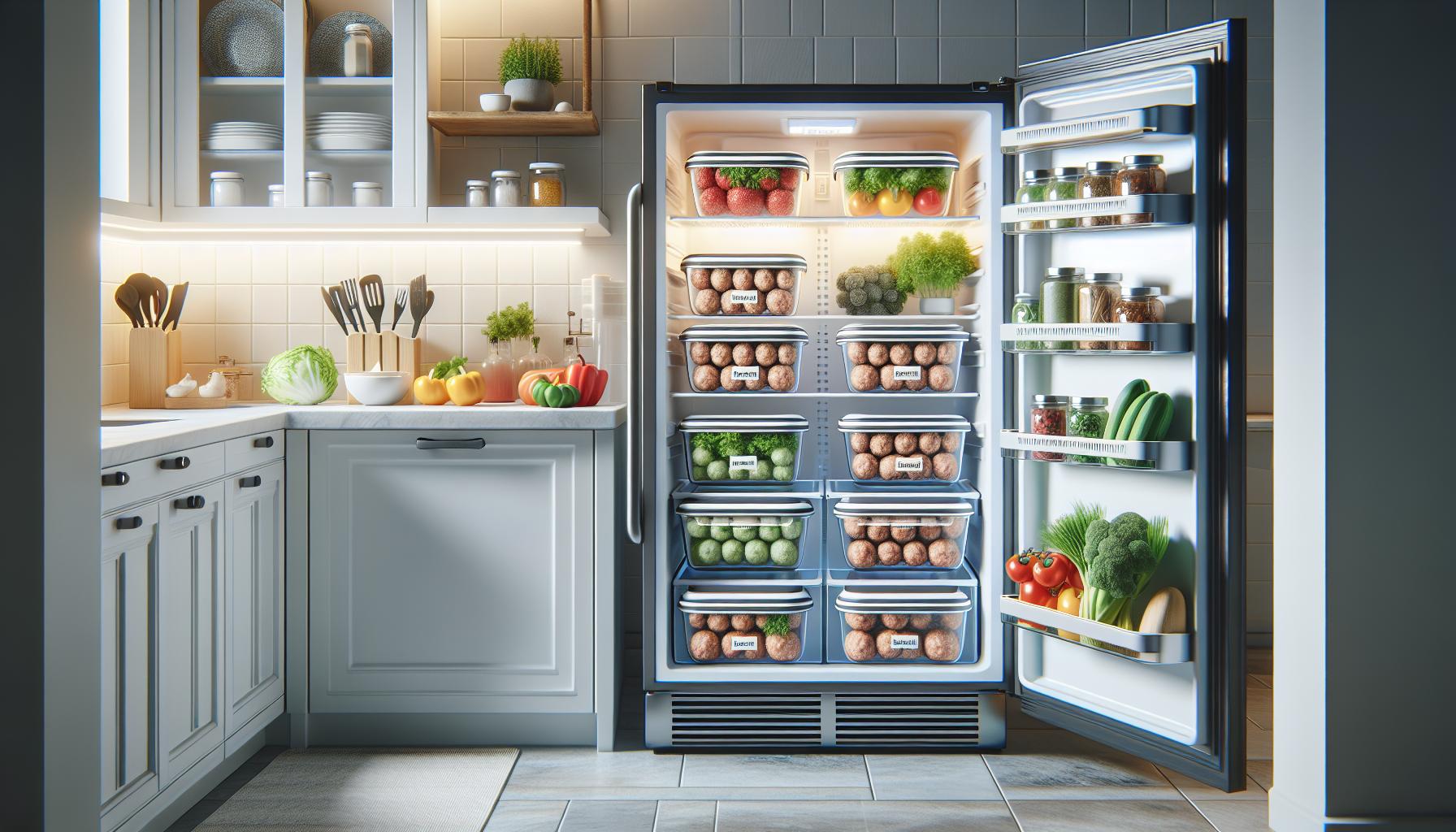
Understanding Meatball Storage Life
To maximize the enjoyment of meatballs while ensuring safety and quality, understanding how long they last in the refrigerator is crucial. Cooked meatballs can generally be stored for 3 to 4 days when placed in an airtight container. Conversely, raw meatballs, relying on fresh ingredients, have notably shorter shelf lives-around 1 to 2 days. These timeframes highlight the importance of knowing when to use or freeze your meatballs to prevent spoilage and waste.
Storage conditions play a significant role in the longevity of meatballs. Maintaining your refrigerator at or below 40°F (4°C) is crucial, as this temperature helps inhibit the growth of harmful bacteria. Even slight fluctuations in temperature can compromise food safety, so a reliable refrigerator temperature is essential. In addition, the packaging method-whether using airtight containers, vacuum sealing, or tightly wrapping in plastic-significantly affects the shelf life and freshness of meatballs. Any exposure to air or moisture can accelerate spoilage, diminishing the taste and safety of your meals.
If you’re ever in doubt about your meatballs’ freshness, rely on your senses. Indicators such as an off smell, slimy texture, or discoloration can signal that the meatballs are no longer safe to eat. By adhering to these storage guidelines and actively monitoring the condition of your meatballs, you’ll be well-equipped to enjoy them safely and deliciously while minimizing food waste.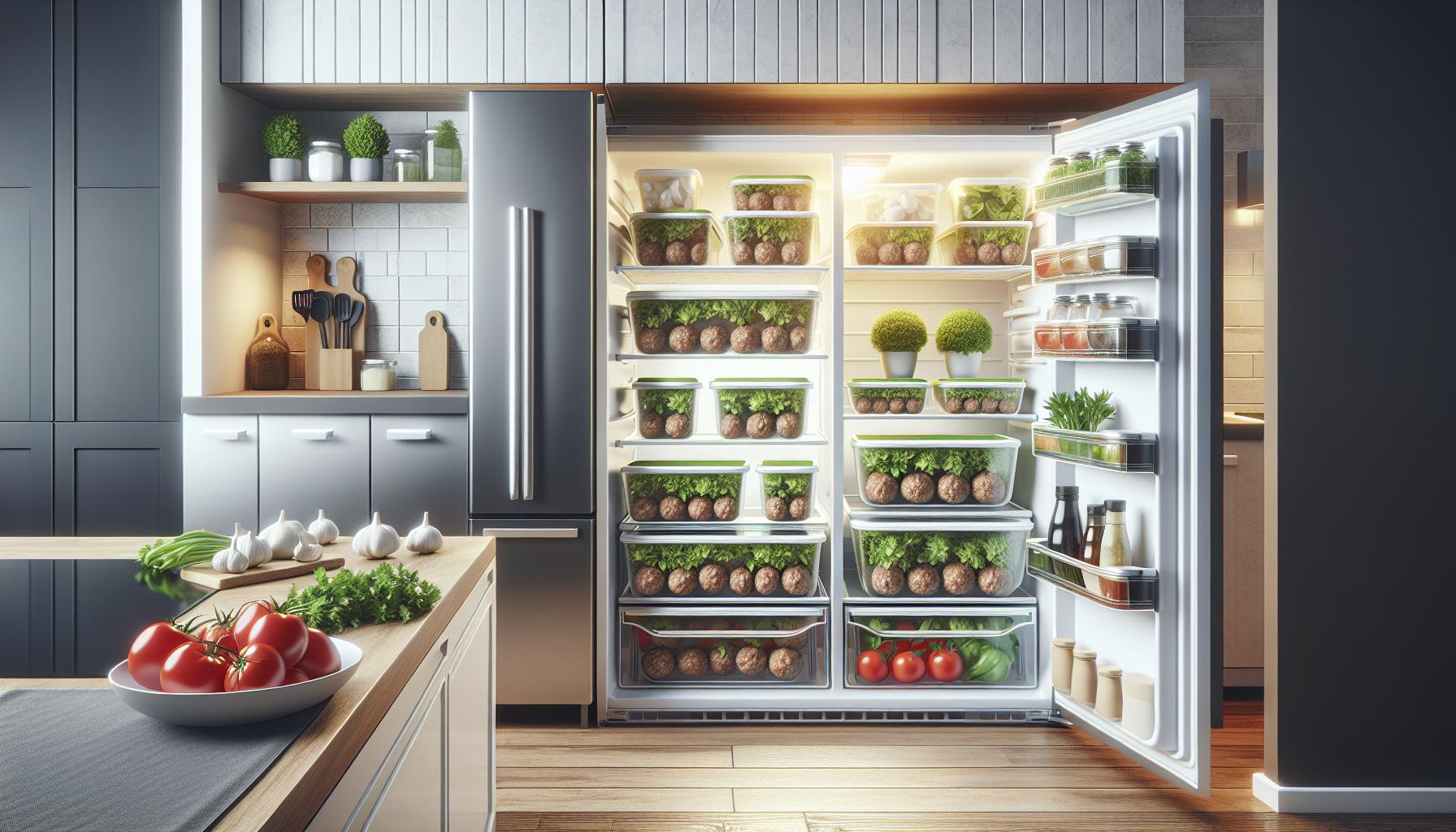
Factors That Affect Meatball Shelf Life
Improper storage can significantly reduce the lifespan of your meatballs, making understanding the factors that influence their shelf life essential. One of the most pivotal elements is the initial quality of the ingredients used. Freshly made meatballs using high-quality meats and fresh add-ins, like herbs and spices, can retain their flavor and texture much longer than those made with subpar ingredients. Additionally, the moisture content of your meatballs plays a crucial role. Moisture allows meatballs to remain tender but can also encourage bacterial growth if they’re not stored properly.
The temperature at which meatballs are stored is another critical factor. Meatballs should always be kept at or below 40°F (4°C) in the refrigerator to inhibit the growth of harmful bacteria. A consistent refrigerator temperature helps maintain the quality and safety of meatballs, while minor fluctuations can lead to spoilage. Preparation methods also affect their longevity. For example, meatballs stored in sauce or gravy tend to last longer, usually 3 to 5 days, as the sauce helps retain moisture and limits exposure to air, compared to uncooked meatballs that may only last 1 to 2 days when raw[1[1].
Packing and storing method are of equal importance. Using airtight containers or vacuum sealing can prevent air and moisture from compromising the meatballs’ quality. Proper wrapping and storage not only extend the shelf life but also maintain taste and texture. In contrast, leaving meatballs exposed to air can lead to dried-out, unappetizing meals within a short period. Understanding these factors empowers you to store meatballs effectively, ensuring they remain safe and delicious for your next meal.
Best Practices for Storing Meatballs
To ensure your meatballs stay safe and tasty during storage, following a few best practices can make all the difference. One of the most effective methods is to store cooked meatballs in an airtight container. This prevents exposure to air, which can lead to oxidation and spoilage. Especially for meatballs that have been cooked and presumably sauced, keeping them sealed helps retain their moisture and flavors, extending their refrigerator life to a commendable 3 to 4 days [1].
Additionally, if you plan to keep meatballs for longer periods, consider freezing them. Properly frozen, meatballs can last for 3 to 4 months without significant loss of quality. To freeze, lay the meatballs out in a single layer on a baking sheet until they’re solid, then transfer them to a freezer-safe bag or container. This helps prevent them from sticking together, so you can easily take out only what you need. When you’re ready to use them, the best methods for thawing include placing them in the refrigerator overnight, using cold water, or thawing in the microwave [2].
It’s also crucial to remember to cool your meatballs before storing them. Placing hot meatballs directly into the fridge can raise the overall temperature inside, creating a risk for other foods. Allow them to cool at room temperature, but no longer than two hours to prevent bacterial growth. Once they’re cool, make sure to label your containers with the date, so you can easily track their freshness. Following these steps will help maintain the flavor and safety of your meatballs, allowing you to enjoy them days later without compromise.
Signs Your Meatballs Have Spoiled
When it comes to meatballs, the last thing you want is to bite into a spoiled one, which can pose health risks. Knowing how to identify the signs of spoilage is crucial for both food safety and enjoyment. First and foremost, always rely on your senses to evaluate the freshness of your meatballs. A noticeable change in odor is one of the first indicators that they have gone bad. Fresh meatballs should have a mild, savory scent; if they emit a sour, unpleasant, or off-putting smell, it’s best to discard them.
Another important sign to watch for is texture. Fresh meatballs have a firm yet moist consistency. If you notice mushiness or a slimy coating, these are clear signs of spoilage. This sliminess can be particularly concerning, as it often indicates bacterial growth. It’s essential to also inspect the meatballs’ color; while variations can occur based on the type of meat used, any unusual discoloration-like green or gray hues-serves as a red flag that they shouldn’t be consumed.
Lastly, be conscious of the duration the meatballs have been stored. Cooked meatballs should ideally be eaten within 3 to 4 days when kept in the fridge. If they have surpassed this timeframe, it’s safer to dispose of them rather than taking any risks. Always err on the side of caution; when in doubt, throw it out. Recognizing these signs can help prevent foodborne illnesses and ensure your meals remain pleasant and safe.
How to Reheat Meatballs Safely and Deliciously
Reheating meatballs doesn’t just restore their warmth; it can revive their flavor and ensure they are safe to eat. Whether you’re enjoying leftovers or reheating frozen meatballs, there are safe and delicious methods to bring them back to life. The goal is to heat them evenly, achieving a temperature of at least 165°F (74°C) to eliminate any potential bacteria. Here are several effective methods to reheat meatballs without sacrificing taste or texture.
Oven Method
For a crispy exterior, the oven is your best choice. Preheat your oven to 350°F (175°C). Place the meatballs on a baking sheet and cover them loosely with aluminum foil to prevent drying out. Heat for about 15-20 minutes, or until they reach the safe internal temperature. If the meatballs are in sauce, you can skip the foil and warmly bubble them directly in a casserole dish.
Stovetop Method
The stovetop allows for a quick and controlled reheating process. In a skillet, add a splash of water or broth to keep the meatballs moist. Cover the skillet and heat over medium heat, turning occasionally. This method typically takes 10-15 minutes. If using sauce, add it to the skillet for a hearty, warmed dish.
Microwave Method
When time is of the essence, the microwave provides a speedy solution. Place meatballs in a microwave-safe dish, preferably with a bit of sauce for moisture. Cover with a lid or microwave-safe wrap, and heat on medium power for 1-2 minutes. Check to ensure they are heated evenly, possibly rotating them halfway through for consistent warmth.
Slow Cooker Option
For a “set it and forget it” approach, consider using a slow cooker. This is particularly effective for larger batches. Place meatballs in the slow cooker with your choice of sauce, set it on low, and leave for a couple of hours. This will allow the flavors to meld and ensure even heating.
By utilizing these reheating methods, not only do you ensure food safety, but you also maintain the sumptuous taste and juicy texture of your meatballs. Remember to always check the internal temperature before serving to guarantee they are safe to eat. Happy reheating!
Freezing Meatballs: A Step-by-Step Guide
Freezing meatballs is an excellent way to extend their shelf life while preserving flavor and texture. When stored properly, meatballs can last in the freezer for about 3 to 4 months, making it a great solution for meal prep, leftover management, or simply stocking up for future meals. Here’s a step-by-step guide to ensure your meatballs freeze beautifully without compromising quality.
Start by allowing your cooked meatballs to cool to room temperature. Placing hot meatballs directly into the freezer can lead to ice crystals forming, which may affect their texture later on. Once cooled, arrange the meatballs on a baking sheet lined with parchment paper in a single layer. This helps prevent them from sticking together as they freeze. Allow them to freeze for about 2 to 3 hours until solid.
Packaging for Freezing
After the meatballs are frozen solid, it’s time to package them properly for long-term storage. Here are some effective options:
- Airtight Freezer Bags: Transfer the frozen meatballs into resealable freezer bags. Try to remove as much air as possible to prevent freezer burn.
- Vacuum Sealers: This method is ideal for those serious about food preservation. Vacuum sealing removes air completely, extending the shelf life significantly.
- Containers: Use heavy-duty, freezer-safe containers if you prefer a rigid option. Ensure there’s a small amount of space at the top, as some foods expand when frozen.
Label each package with the date and contents, using a permanent marker, to keep track of their freshness. When ready to use, meatballs can be thawed safely in the refrigerator overnight, or you can add them directly to sauces without prior thawing, adjusting the cooking time accordingly. Always ensure reheating to an internal temperature of 165°F (74°C) for safe consumption.
By following these steps, you can enjoy the convenience of having ready-to-cook meatballs on hand, helping you maintain meal variety and reduce food waste while ensuring they stay delicious longer.
Tips to Keep Meatballs Tasty Longer
To keep meatballs tasting delightful for longer, effective storage techniques and fresh ingredient choices are crucial. One key aspect is using the right container. Opting for airtight containers or vacuum-sealed bags can significantly help extend the meatballs’ freshness. When stored loose in the fridge, meatballs can typically last only 2-3 days, but when submerged in sauce or gravy, they can last up to 3-5 days [1[1]. To further enhance their shelf life, make sure to store your meatballs at a consistent refrigerator temperature of 40°F (4°C) or lower, as warmer temperatures can foster bacterial growth.
Another effective strategy is to reheat meatballs properly when you’re ready to enjoy them. Ensure you reheat them to an internal temperature of 165°F (74°C) to guarantee safety and maintain flavor. If you plan to enjoy them after a few days, consider freezing them. Proper freezing can extend their shelf life for up to 3-4 months. Remember, when freezing, always cool the meatballs fully before placing them in the freezer to prevent texture changes caused by ice crystal formation [2[2]. Pre-freezing on a baking sheet before transferring them to a storage bag can also help them maintain their shape and prevent sticking.
Pay attention to the quality of ingredients used in your meatballs, as fresh meats and herbs contribute significantly to their flavor and longevity. Using high-quality, fresher ingredients will not only enhance the taste of your meatballs but will also ensure better preservation during storage. With these precautions, you can enjoy your meatballs longer while keeping them delicious.
Cooking Tips for Longer Freshness
Using proper cooking techniques can significantly enhance the freshness and flavor of your meatballs, ensuring they taste great even days after cooking. One effective approach is to incorporate moisture-rich ingredients such as grated vegetables or soaked bread, which not only improve texture but also help retain moisture during cooking. By opting for lean meats with some fat content, you strike the right balance for tenderness and flavor, which also plays a crucial role in extending their longevity in the fridge.
To further enhance the shelf life of your meatballs, consider cooking them until they are just done. Overcooking can lead to a dry texture, diminishing their appeal and potentially impacting their freshness. Instead, aim for an internal temperature of about 160°F (71°C) for ground beef or pork; they can be finished reheating to 165°F (74°C) when served. This method not only preserves their moisture but also makes them safer to store for a longer period.
Additionally, if you’re preparing a large batch of meatballs, divide them into smaller portions before cooking. This allows you to freeze or refrigerate only what you need while keeping the rest fresh for future use. Place the cooked meatballs in an airtight container or vacuum seal them to prevent exposure to air, which can lead to freezer burn or spoilage. For ideal results, consume or freeze meatballs within three to five days, particularly when they are stored in sauce, which helps to maintain their moisture and flavor.
By following these straightforward cooking tips, you’ll maximize the deliciousness and longevity of your meatballs, making them a versatile and enjoyable meal option that can stand the test of time in your fridge.
How Long Do Different Types of Meatballs Last?
Different types of meatballs can have varied storage lives in the refrigerator, primarily influenced by the meat used and the preparation methods. Understanding these differences is essential for maintaining the quality and safety of your cooked meatballs. Generally, meatballs made from beef, pork, or poultry should be consumed within three to four days when stored properly in the fridge. However, keeping the type of meat in mind is crucial, as each presents unique characteristics.
Storage Times by Meat Type
- Beef Meatballs: These typically last about 3 to 4 days in the refrigerator. Ground beef is prone to oxidation, which can alter its flavor and texture. It’s best to store them in an airtight container to prevent moisture loss and oxidation.
- Pork Meatballs: Similar to beef, pork meatballs can also last approximately 3 to 4 days. Make sure they are cooled quickly after cooking, as this helps in prolonging their freshness.
- Poultry Meatballs: Meatballs made from chicken or turkey tend to have a slightly shorter shelf life, often lasting around 3 days. Cooking poultry thoroughly and storing it promptly can minimize the risk of bacterial growth.
- Vegetarian/Vegan Meatballs: If you are using plant-based alternatives, such as lentils or beans, these meatballs usually can be refrigerated for 4 to 5 days, depending on other ingredients used. Be mindful of sauces or oils that can impact their longevity.
Storing meatballs in sauce can help maintain their moisture and flavor, potentially extending their shelf life by a day. To maximize freshness, always refrigerate meatballs in an airtight container and label them with the date cooked to monitor their storage time effectively. If in doubt about the freshness of your meatballs, it’s always safest to do a quick visual and scent check; discard any that exhibit signs of spoilage, such as an off odor or discoloration.
By following these guidelines, you can ensure that your meatballs remain safe and tasty throughout their storage life.
Safe Storage Containers for Meatballs
Selecting the right storage containers can significantly impact the freshness and safety of your meatballs. Here are some essential guidelines to ensure that your delicious creations remain as tasty as the day they were cooked.
Airtight containers are the gold standard for storing meatballs. They not only prevent air from entering but also protect the meatballs from any unwanted moisture or odors in your refrigerator. Look for containers made of glass or BPA-free plastic, as these materials are durable, non-reactive, and provide excellent insulation. Ensure that the container has a secure lid to maintain an airtight seal.
When storing meatballs in sauce, consider using deeper containers to accommodate the extra liquid without risk of spilling. A wide, flat container is ideal as it allows for even cooling and prevents the meatballs from becoming soggy. After placing the meatballs in the container, let them cool down to room temperature before sealing and refrigerating them to avoid condensation, which can promote bacterial growth.
For longer storage, vacuum sealing is an excellent option. This method removes air exposure completely, extending the shelf life of meatballs to about two weeks. If you don’t have a vacuum sealer, placing meatballs in resealable freezer bags can provide similar benefits-just ensure to remove as much air as possible before sealing.
Remember to always label your containers with the date of cooking. This simple step can help you track how long they’ve been stored, ensuring you consume them while they are still safe and delicious. By choosing the appropriate storage containers and following these practices, you can enjoy your meatballs for days to come, minimizing waste and maximizing flavor.
Frequently Overlooked Meatball Storage Mistakes
Many cooks unknowingly make mistakes when it comes to storing meatballs, which can lead to spoilage, loss of flavor, or even foodborne illness. One of the most common errors is not allowing meatballs to cool before placing them in the fridge. Refrigerating hot meatballs can raise the temperature inside the refrigerator, creating a perfect environment for bacteria to thrive. It’s crucial to let meatballs cool to room temperature for about 30 minutes before sealing them up, ensuring food safety and maintaining the fridge’s overall temperature.
Another frequent oversight involves overcrowding containers. Packing meatballs too tightly can prevent air circulation, leading to uneven cooling and potential spoilage. Always store meatballs in a single layer if possible, or use containers that allow space for air to circulate. Using separate containers for meatballs and sauce can also be beneficial, as sauce can cause meatballs to become soggy and promote bacterial growth if they’re stored together for too long.
Lastly, neglecting to label storage containers is a simple yet crucial mistake. Without proper dating, it’s easy to forget when the meatballs were made, risking consumption of spoiled food. Always use a masking tape or a label maker to note the date on your storage containers. By being mindful of these often-overlooked mistakes, you can extend the shelf life of your meatballs, keeping them safe and flavorful for longer. Remember, a little attention to detail in storage goes a long way in maintaining meal quality.
Q&A
Q: How long can you store cooked meatballs in the fridge?
A: Cooked meatballs can be safely stored in the fridge for 3 to 4 days. To ensure they stay fresh, keep them in airtight containers and at a temperature of 40°F (4°C) or below. Check out the section on “How Long Do Meatballs Last in the Fridge?” for more details.
Q: What should I do if my meatballs smell bad?
A: If your meatballs emit an off or sour smell, this is a clear sign they have spoiled and should be discarded immediately. Always check for any unusual odors as part of your meatball safety routine.
Q: Can you eat meatballs past their expiration date if they look and smell okay?
A: It is not recommended to eat meatballs past their expiration date, even if they seem fine. Safety comes first, so it’s best to err on the side of caution. Refer to the “Signs Your Meatballs Have Spoiled” section for more tips.
Q: How can I tell if my meatballs are spoiled?
A: Spoiled meatballs may exhibit changes in color, smell sour or off, feel slimy, or develop a crust. Always perform a visual and smell check before consuming any stored meatballs. Explore the section on “Signs Your Meatballs Have Spoiled” for more guidance.
Q: Is it safe to leave meatballs out at room temperature?
A: No, it is not safe to leave meatballs out at room temperature for more than 2 hours. Heat encourages bacterial growth, so always refrigerate them promptly to maintain safety and quality.
Q: Can I store meatballs in the freezer? How long do they last?
A: Yes, you can freeze meatballs for up to 3 to 4 months. Ensure they are in freezer-safe bags or containers with as much air removed as possible to prevent freezer burn. Check the “Freezing Meatballs” section for detailed guidance.
Q: How do I properly reheat meatballs?
A: To reheat meatballs, place them in a microwave-safe dish, cover with a lid or microwave-safe wrap, and heat on medium for 1-2 minutes or until hot throughout. For better taste, consider reheating in a sauce on the stove.
Q: Can I mix different types of meat in meatballs?
A: Yes, mixing different types of meat, such as beef, pork, and turkey, can enhance flavor and texture. Just ensure they are cooked thoroughly for safety. For cooking techniques, refer to “Cooking Tips for Longer Freshness.”
Insights and Conclusions
To keep your meatballs tasting fresh and safe, remember to store them properly in an airtight container and consume them within 3-4 days. If you still have questions about food safety practices or want tips on meal prep, check out our related articles on “Freezing Leftovers Safely” and “How to Reheat Meatballs Without Drying Them Out.” Your culinary journey doesn’t have to end here-join our newsletter for more insights that will elevate your cooking experience.
Don’t hesitate to reach out with any comments or share your own tips below! For even more on maximizing your food’s freshness, explore our guide on best food storage practices. Remember, a little knowledge goes a long way in the kitchen!