


Did you know that fresh milk can spoil faster than you might think? Understanding how long fresh milk lasts in the fridge is essential for maintaining its quality and ensuring your safety. With proper storage, you can help prevent waste and enjoy the creamy goodness of milk without the concern of spoilage.
In this guide, we’ll break down the crucial factors that affect milk’s shelf life, including storage tips and best practices for keeping it fresh. Whether you’re a busy parent trying to minimize waste or a health-conscious individual wanting to make the most of your groceries, knowing how to store milk properly is key. Stay tuned as we uncover expert insights to help you keep your milk fresh longer!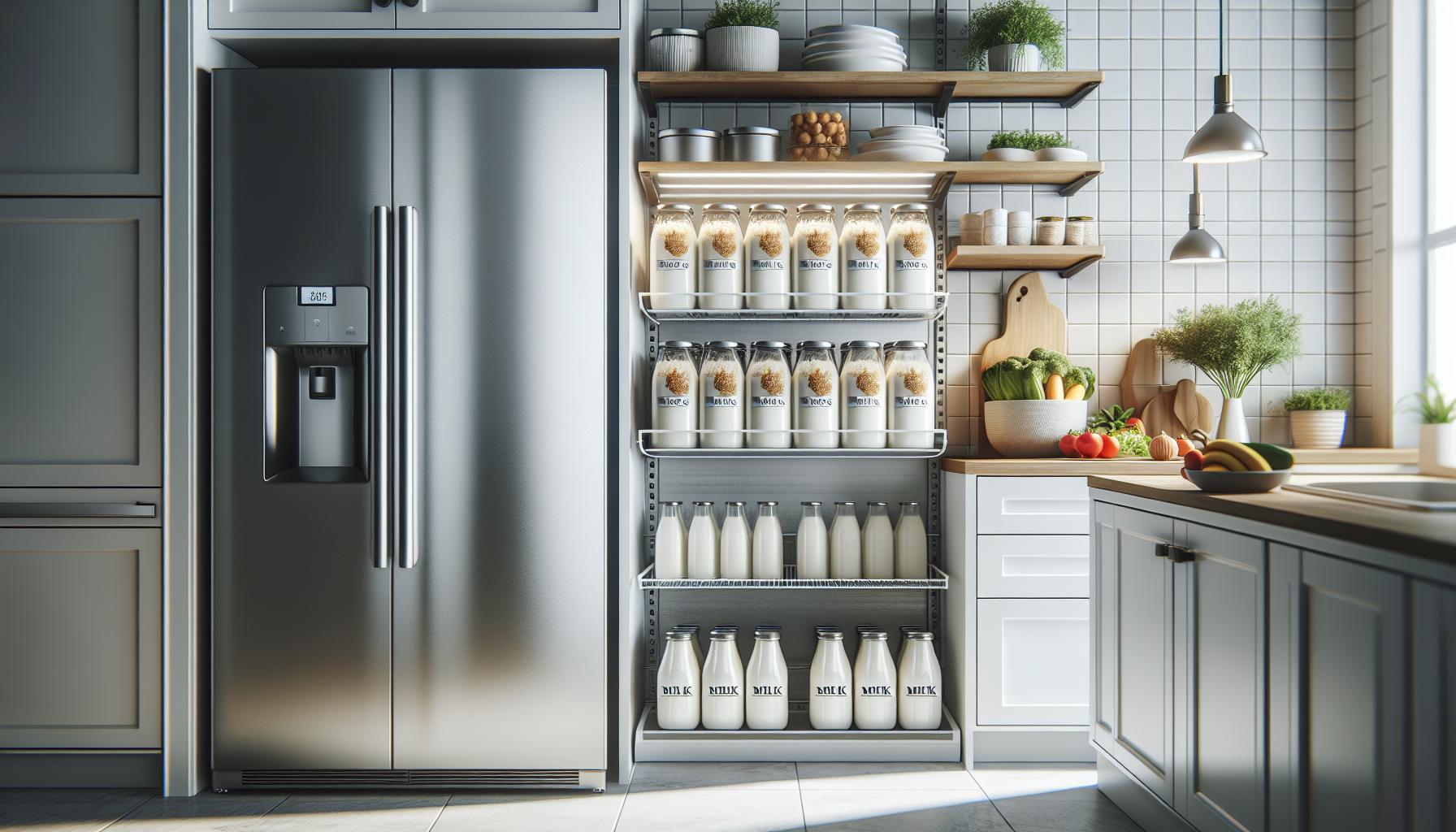
How Fresh Milk Spoils: Key Factors Explained
Fresh milk is a staple in many households, but understanding how it spoils can significantly extend its shelf life and enhance food safety. The primary factors contributing to the spoilage of fresh milk include microbial growth, temperature fluctuations, and exposure to light. When milk is left at an inappropriate temperature, bacteria such as Lactobacillus can thrive, leading to souring and off-flavors. Additionally, each time a container is opened, bacteria from the air or from contact with utensils can introduce new microorganisms, accelerating spoilage.
To prevent such microbial contamination, it’s crucial to store milk at a consistent refrigerated temperature of 40°F (4°C) or lower. Keeping milk in the coldest part of the refrigerator-not in the door-can help maintain its freshness. Another key aspect to consider is light exposure; ultraviolet rays can break down riboflavin and other vitamins, leading to faster spoilage and off-flavors. Hence, keeping milk in opaque containers or in a dark area of the fridge is advisable.
In summary, by being mindful of temperature control, minimizing air exposure, and protecting milk from light, you can significantly reduce spoilage and keep your milk fresh longer. Adopting these practices not only enhances safety but also saves you money by reducing waste, ensuring that you can enjoy milk’s nutritional benefits with confidence.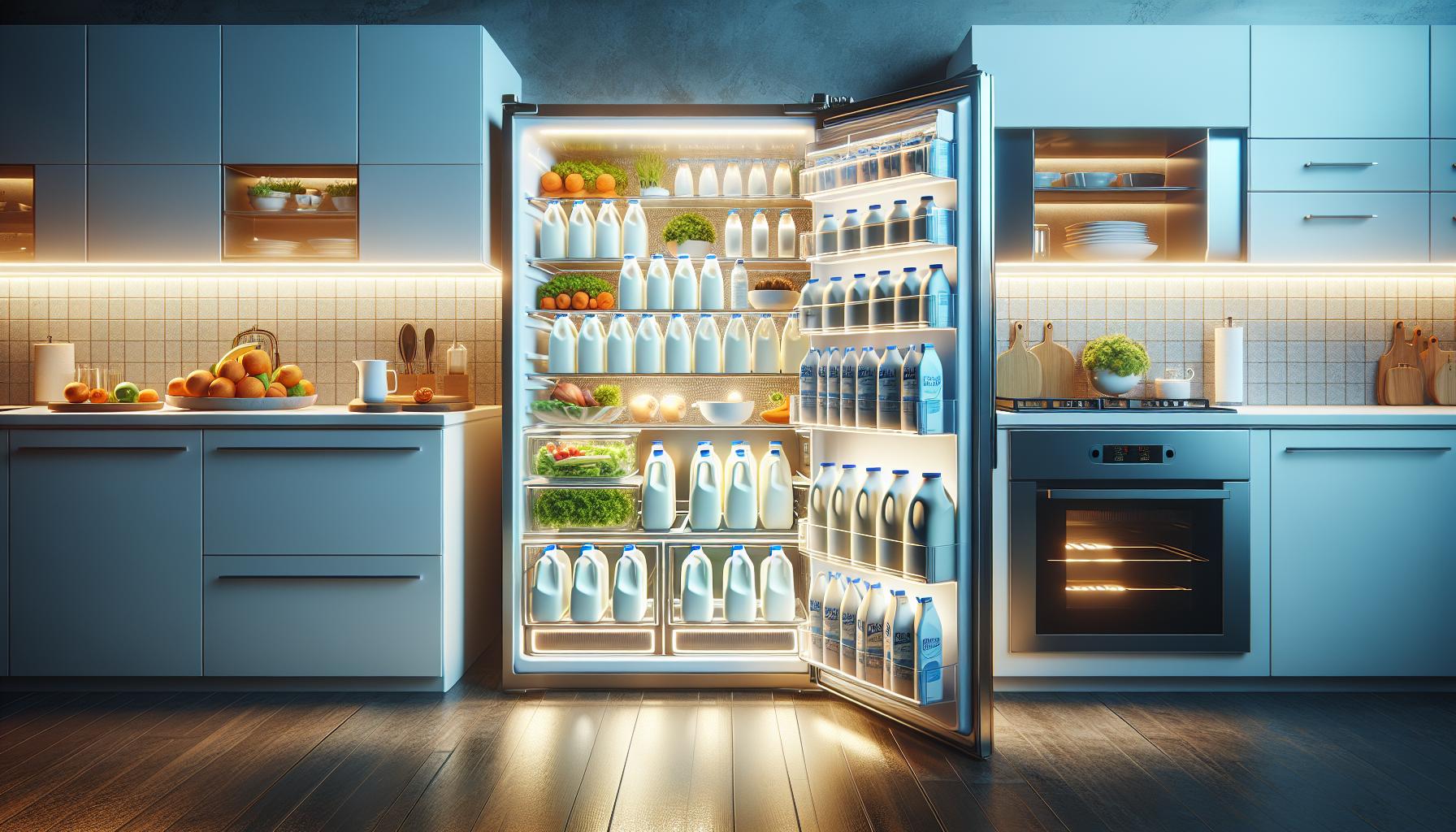
Optimal Storage Conditions for Fresh Milk
To ensure the freshness of your milk and prevent spoilage, optimal storage conditions are paramount. Did you know that maintaining the right temperature can significantly extend the shelf life of fresh milk? Proper storage not only preserves flavor and texture but also safeguards your health by reducing the risk of bacterial growth.
Milk should always be stored in the refrigerator at a consistent temperature of 40°F (4°C) or lower. This temperature inhibits the growth of harmful bacteria that can cause spoilage. It’s advisable to place milk in the coldest area of the refrigerator-typically the back of the middle shelf-rather than on the door where temperatures fluctuate more. When you first bring milk home, remember to keep it sealed until you’re ready to use it. Opening the container introduces bacteria from the air, accelerating the spoilage process.
Another critical factor in maintaining milk’s freshness is light exposure. Ultraviolet rays from light can not only degrade milk’s nutrients but also lead to unpleasant off-flavors. To combat this, store milk in opaque containers or shield it from light by placing it in a dark part of the fridge. Additionally, ensure that the containers are tightly sealed after each use to minimize air exposure, which can also promote spoilage.
Lastly, it’s essential to monitor expiration dates and use your senses. Fresh milk can last about 5 to 7 days after the sell-by date if stored properly, but always check for signs of spoilage, such as an off smell or a change in texture. By adhering to these optimal storage conditions, you’ll maximize the freshness and safety of your milk, allowing you to enjoy it in your favorite dishes and beverages without worry.
Signs Your Milk Has Gone Bad
Milk can seem perfectly fine one day and then unexpectedly go bad the next. Understanding the signs of spoiled milk is essential for maintaining culinary safety and ensuring that your dishes remain delightful. One of the most telling indications that milk has spoiled is its smell. Fresh milk emits a clean, slightly sweet scent. In contrast, spoiled milk often produces a sour odor, reminiscent of yogurt or curdled products. If you notice any unusual scents, it’s best to err on the side of caution and discard the milk.
Another important factor to consider is the texture of the milk. Fresh milk should have a smooth, fluid consistency. If you observe any lumps or curdling, it signals that fermentation has begun, meaning the milk is no longer safe to consume. Furthermore, you should also watch for changes in color. Fresh milk is typically a uniform white or off-white color. If you see any discoloration, such as yellowing or greyish tones, it’s an indication that the milk is aging and may have started to spoil.
Taste can also be an indicator, but it should be used as a last resort. If your milk appears fine but you’re in doubt, take a small sip. Spoiled milk will taste distinctly sour and unpleasant. Always trust your senses, as they are your best tool in determining the quality of perishable goods. Keep in mind that consuming spoiled milk can lead to gastrointestinal discomfort, so it’s wise to familiarize yourself with these signs and practice vigilance when it comes to dairy products.
In conclusion, regularly checking for odor, texture, and visual signs can help you determine if your milk is still fresh and safe for consumption. By being proactive and aware of these indicators, you can effectively reduce food waste and ensure that your meals remain enjoyable and safe.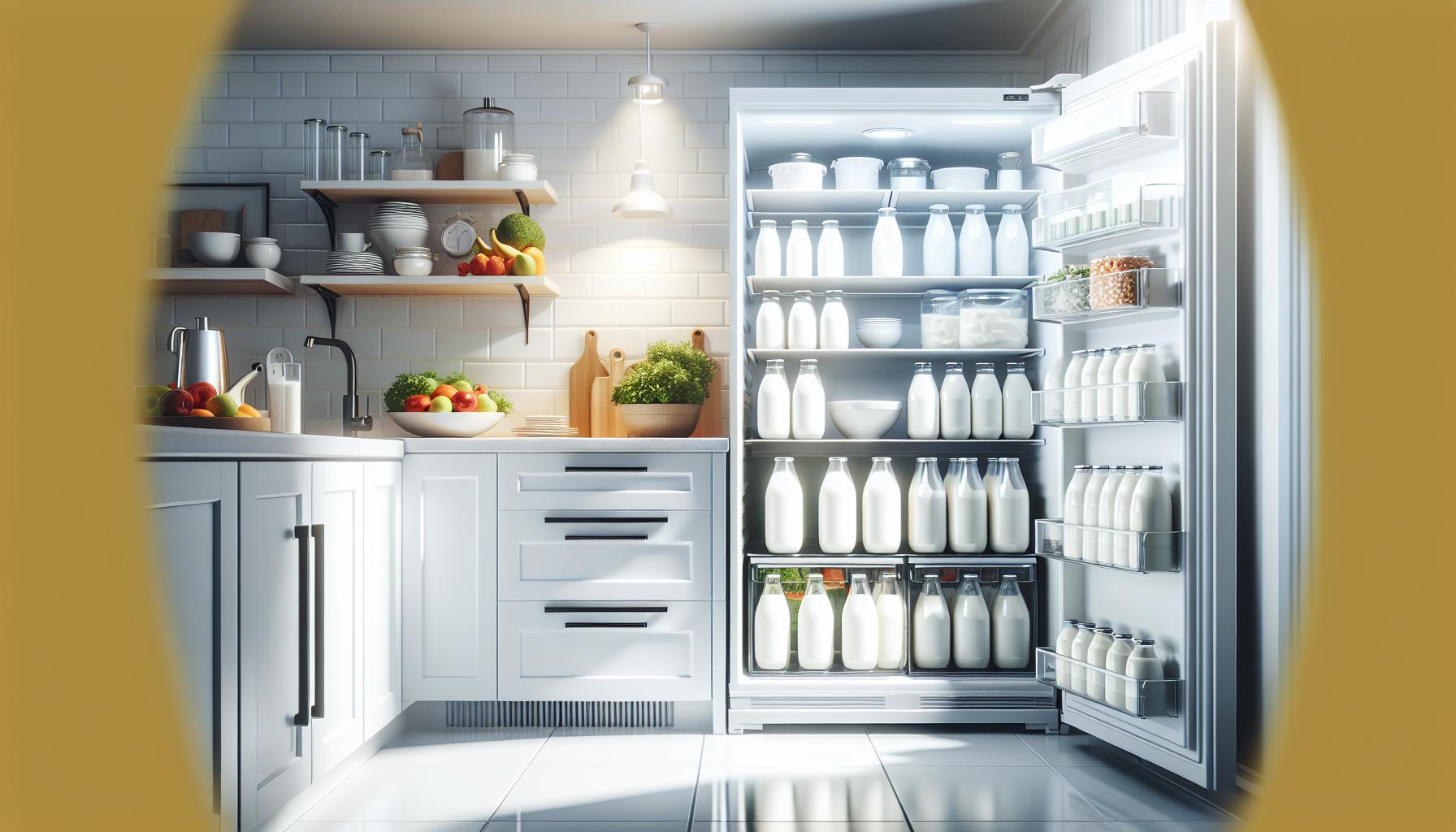
The Best Practices for Milk Storage
Milk, a staple in many households, is particularly sensitive to its storage conditions. To ensure your fresh milk lasts as long as possible and retains its quality, adhering to best practices for storage is crucial. The ideal temperature for milk storage is below 40°F (4°C). Keeping milk consistently cold helps slow down the growth of bacteria, which can lead to spoilage. Therefore, it’s recommended to store milk in the main body of the refrigerator rather than the door, as the temperature is more stable there.
When it comes to containers, choosing the right type can also impact milk longevity. Milk should be kept in its original container, which is designed to protect it from light and air. However, once opened, consider transferring it to an airtight container if you notice that the original packaging is damaged or compromised. Avoid using any unwashed containers for storing milk, as they can introduce harmful bacteria.
It’s a common misconception that milk lasts indefinitely when stored properly. In reality, while pasteurized milk can last up to 7-10 days after the expiration date if refrigerated correctly, this timeframe diminishes once the container is opened. To maximize freshness, always seal the container tightly after each use and use it within a week. Additionally, make it a habit to write the date of opening on the container, serving as a vital reminder of its freshness.
Lastly, consider practicing the “first-in, first-out” method. When purchasing new milk, place it behind older bottles in the refrigerator to ensure that you consume the older milk first. Adopting these simple yet effective practices will not only help maintain the quality of your milk but also minimize waste, ensuring that every glass remains delightful and safe for consumption.
Understanding Expiration Dates vs. Sell-By Dates
Understanding the difference between expiration dates and sell-by dates is essential for ensuring the freshness and safety of your milk. Often confused, these dates provide valuable information about the quality and usability of your dairy products. The sell-by date primarily serves as a guideline for retailers, indicating the last day the product should be sold while ensuring it remains fresh for consumers after purchase. Typically, milk can still be consumed for several days past this date if it has been stored correctly and remains unopened.
On the other hand, the expiration date marks the last day the product is guaranteed to retain its intended quality. Consuming milk beyond this date, particularly if it has been opened, can increase the risk of spoilage. To maximize milk’s shelf life, it’s best to adhere to both dates while utilizing your senses-smell and taste can provide reliable indications of freshness. Generally, pasteurized milk can remain good for 7-10 days after its sell-by date, but it’s critical to store it properly and check for any signs of spoilage before use.
To help manage milk consumption effectively, consider these guidelines:
- Check the date: Always note both the sell-by and expiration dates before purchasing.
- Buy fresh: Opt for products with the furthest dates to ensure maximum usability.
- Store correctly: Keep milk below 40°F (4°C) and sealed tightly to prolong freshness.
- Use senses: Before consuming, check for off odors or changes in texture.
By understanding these crucial labeling distinctions, you can make informed decisions that enhance food safety while reducing food waste. Observing good practices when it comes to dates will ensure that every drop of your milk is enjoyable and safe to consume.
How Temperature Affects Milk Freshness
Milk is a delicate product that can spoil quickly if not stored properly, and temperature plays a pivotal role in maintaining its freshness. Keeping milk chilled at optimal temperatures limits the growth of bacteria that can cause spoilage, ensuring that it stays good for a longer period. The USDA recommends keeping your refrigerator at or below 40°F (4°C) to maintain food safety for all perishable items, including milk.
Fluctuations in temperature can trigger rapid spoilage. For instance, if milk is stored on the refrigerator door, where temperatures can be warmer due to frequent opening, it might not remain fresh as long as milk stored in the back of the fridge. Inconsistent temperatures can encourage bacteria to multiply, rapidly reducing the milk’s shelf life. To counter this, place your milk in the main body of the refrigerator rather than in the door, which often experiences temperature changes.
Optimal Storage Practices
To optimize the freshness of your milk, consider these storage practices:
- Avoid warm spots: Temperature variation can accelerate spoilage, so keep milk consistently stored in the coldest section of the fridge.
- Seal tightly: Ensure that the container is tightly sealed to prevent air exposure, which can lead to oxidation and spoilage.
- Keep it clean: Regularly clean the shelves of your refrigerator to eliminate food particles that might contaminate your milk.
By following these guidelines, you can significantly extend the freshness of your milk, keeping its flavor and safety intact. Remember that the fresher the milk remains, the better it is not only in terms of taste but also for your health.
Tips for Extending the Shelf Life of Milk
To keep fresh milk at its best for as long as possible, implementing simple yet effective storage strategies is essential. One underestimated fact is that even a few degrees of temperature variation can significantly impact milk quality, leading to premature spoilage. Thus, the primary goal should be to maintain a stable, cold environment while being mindful of how milk is handled and stored.
First, always ensure that your milk is sealed tightly. Exposure to air can lead to oxidation and a decline in flavor and quality. If you’re using milk from a larger container, consider transferring it into smaller, opaque bottles that can be sealed tightly, minimizing exposure to light and air. Light is another enemy of milk, as it can cause the breakdown of riboflavin (vitamin B2) and negatively impact taste.
Moreover, it’s crucial to avoid placing milk in the refrigerator door, where temperatures can fluctuate due to frequent opening and closing. Instead, store your milk in the coldest part of your fridge, typically located towards the back. Avoiding warm spots that can arise from the placement near the refrigerator’s front or the door can significantly delay spoilage.
Additionally, you can enhance the longevity of your milk by keeping an eye on the storage date. Even though many milk products will typically remain good for about a week after the printed expiration date, leveraging the “first in, first out” rule-using older milk before newer stock-helps prevent waste. Also, if you have leftover milk that you know you won’t finish, consider freezing it in an airtight container. Frozen milk can last for up to three months, though it may separate upon thawing; a good shake will usually bring it back to its original consistency.
Lastly, always be vigilant about cleanliness. Regularly clean and disinfect your refrigerator shelves to minimize contamination risks. If you detect any off odors or changes in texture, it’s best to discard the product to avoid consuming spoiled milk. Following these practical tips ensures that you maximize the freshness of your milk, making it last longer while maintaining its taste and nutritional value.
Using Milk Beyond Its Expiration Date: Safe Methods
Milk can be a staple in many households, and it’s common to wonder whether you can still use it after its expiration date has passed. Surprisingly, the answer often leans towards yes, but with caution. Milk has a certain degree of resilience; it can still maintain its quality even after the expiration date, provided it has been stored correctly and shows no signs of spoilage.
To safely use milk beyond its expiration date, start with a thorough sensory evaluation. Check the smell-fresh milk has a sweet, neutral scent, while spoiled milk can have a sour odor. Next, inspect the texture; milk should be smooth and fluid. If it has curdled or developed lumps, it’s best to err on the side of caution and discard it. It’s also wise to perform a taste test. If the milk seems off in flavor, it’s not a good idea to consume it.
Once you’ve established that the milk is still acceptable, here are safe methods for using it. Use milk that is nearing its expiration date in cooking or baking, where its flavor blends well with other ingredients. This is an excellent opportunity to make recipes like creamy soups, gravies, or baked goods that require milk. You can also consider making homemade cheese or yogurt-a fun way to extend the life of your dairy products. If the milk looks good but you just won’t finish it in time, freezing is an option. Pour the milk into airtight containers, leaving a little space at the top for expansion, and freeze it for later use. Remember to allow the milk to thaw in the refrigerator, and give it a good shake before using, as it may separate during freezing.
In summary, while the expiration date is a guideline, it doesn’t necessarily dictate the safety or usability of milk. Always prioritize sensory checks to determine freshness and apply creative culinary methods to make the most of your milk, ensuring minimal waste and optimal enjoyment.
Storage Solutions: Containers and Locations in the Fridge
The way you store fresh milk can significantly impact its longevity and safety. An often overlooked fact is that milk is sensitive to temperature fluctuations, and improper storage can accelerate spoilage. To maximize freshness, it is crucial to choose the right containers and locate them correctly in your fridge.
Milk should always be stored in its original container whenever possible. These containers are designed to restrict light exposure, which can degrade milk quality. If you opt to transfer your milk to another container, use glass or BPA-free plastic. Ensure the container is airtight to prevent the absorption of odors from other foods in the fridge. For those who buy milk in bulk, consider separating it into smaller portions. This not only makes it easier to use but also reduces the number of times you open the main container, limiting exposure to air and bacteria.
Optimal Locations in the Fridge
Placement in the refrigerator is just as important as the container. Avoid storing milk in the fridge door, as this is the warmest part due to frequent openings. Instead, place your milk on a middle shelf, where temperatures are more consistent. Always keep your fridge at or below 40°F (4°C) to ensure optimal freshness. For extra assurance, use a fridge thermometer to double-check the temperature.
- Tip 1: Hold the milk jug upright to prevent leakage and contamination.
- Tip 2: Avoid placing milk near strong-smelling foods like garlic or onions to prevent flavor transfer.
- Tip 3: Check the fridge’s settings regularly, especially during seasonal changes, to maintain appropriate temperatures.
By adhering to these storage solutions-using the right containers and placing your milk strategically in the fridge-you can significantly prolong its shelf life and enjoy it at its freshest. Adopting these practices will also help prevent waste and ensure your dairy products remain safe for consumption.
Frequently Overlooked Milk Storage Mistakes
Milk is a staple in many households, yet improper storage practices can lead to premature spoilage, wasting both money and food. One common oversight is treating milk like any other grocery item without acknowledging its unique requirements. For instance, many people store milk in the fridge door, a spot that is subject to temperature fluctuations every time the door opens. This can shorten the milk’s shelf life considerably, as the ideal temperature for milk storage is consistently at or below 40°F (4°C). Instead, milk should be placed on the middle shelves of the fridge, where temperatures are more stable.
Another frequently overlooked mistake is failing to check the expiration and sell-by dates correctly. Many consumers assume that milk is good until the printed date without considering that once a carton is opened, its freshness can rapidly decline. It’s wise to consume opened milk within 5 to 7 days for optimal quality, regardless of the expiration date. Furthermore, discarding milk by failingly relying on smell or taste alone can be risky. Instead, look for visual cues such as lumps or curdling, which indicate spoilage.
Moreover, improper sealing of milk containers can also lead to spoilage. If you transfer milk to another container, ensure it’s airtight and made from materials that don’t react with dairy. Glass or food-grade plastic containers are ideal, as they prevent oxidation and flavor transfer from other foods. Always remember to securely close caps and lids after pouring to minimize exposure to air and bacteria.
Lastly, it is crucial to avoid mixing new milk with older milk in the same container. This practice can introduce bacteria from the older milk into the newer batch, accelerating spoilage. Always pour the remaining milk into a separate container if used from a shared carton and consume it promptly. By being mindful of these common mistakes, you can extend the life of your fresh milk and enjoy its quality for as long as possible.
Frequently Asked Questions
Q: How can I tell if milk is past its prime?
A: To determine if milk is past its prime, check for changes in smell, texture, and appearance. If the milk smells sour, has a lumpy or curdled texture, or displays a yellowish color, it is likely spoiling. Always trust your senses to ensure freshness.
Q: Can I freeze fresh milk to extend its shelf life?
A: Yes, you can freeze fresh milk to extend its shelf life. Milk can be frozen for 3-6 months. To freeze, pour it into an airtight container, leaving space for expansion. Thaw in the refrigerator and shake well before use, as separation may occur.
Q: Does the type of milk affect how long it lasts?
A: Yes, the type of milk affects its shelf life. Whole milk typically lasts 5-7 days past its sell-by date, whereas skim or low-fat milk may last 7-10 days longer due to lower fat content. Always check for spoilage regardless of type.
Q: What should I do with milk that has been left out of the fridge?
A: If milk has been left out of the fridge for more than two hours, it is unsafe to consume and should be discarded. Bacteria multiply quickly at room temperature, compromising food safety.
Q: Are there specific storage containers that keep milk fresher longer?
A: Yes, opaque containers keep milk fresher longer by protecting it from light, which can cause spoilage. Use glass or BPA-free plastic containers with tight-sealing lids for optimal storage.
Q: Is it safe to consume milk that smells good but is near its expiration date?
A: It may be safe, but caution is advised. Always perform a smell, taste, and visual check, and remember that expiration dates are guidelines. If there are any signs of spoilage, discard the milk to avoid foodborne illness.
Q: How does the refrigerator temperature affect milk storage?
A: Maintaining your refrigerator at or below 40°F (4°C) is crucial for milk storage. A consistent low temperature slows bacterial growth, helping to maximize freshness and extend the shelf life of your milk.
Q: What can I do to minimize milk spoilage?
A: To minimize spoilage, store milk in the back of the refrigerator where it’s coldest, keep the lid tightly closed to prevent exposure to air and light, and avoid frequent temperature changes by returning it to the fridge promptly after use.
Closing Remarks
To ensure your fresh milk stays safe and enjoyable, remember that it lasts about 5-7 days past the date on the carton when stored properly in the fridge. Always check for signs of spoilage before use, and don’t hesitate to discard it if you’re unsure. For more tips on maximizing the freshness of your dairy products, check out our articles on “Best Practices for Storing Cheese” and “How to Tell if Dairy is Spoiled.”
Ready to optimize your food safety knowledge? Explore more resources on our site, and don’t forget to sign up for our newsletter for the latest updates and expert advice delivered straight to your inbox. If you still have questions or want to share your own tips, leave a comment below! Your journey towards better food handling practices starts now-because every drop matters!


