
Sourdough starter is a culinary treasure, offering a unique way to make tangy, flavorful bread right at home. But how long can you keep your sourdough starter in the fridge without losing its potency? Understanding the lifespan of your starter is crucial for maintaining its health and ensuring you can bake delicious bread whenever the craving strikes.
Many home bakers worry about the safety and quality of their starter after it’s been stored. Rest assured, with proper care and storage techniques, you can enjoy the benefits of your starter for weeks or even months. This guide will provide you with clear, science-based information on how long your sourdough starter can last in the fridge, along with essential tips for revitalizing it when you’re ready to bake again. Let’s dive into the best practices for sourdough storage, ensuring your baking adventures remain both safe and successful.
How Long Can Sourdough Starter Last in the Fridge?
Sourdough starter can remain viable in the fridge for several weeks, typically up to 4 to 6 weeks, depending on how it is stored and maintained. During refrigeration, the yeast and bacteria in the starter slow down their activity significantly due to the lower temperature, allowing the starter to rest while still remaining alive. However, it’s essential to keep an eye on its health to ensure it remains active and usable for baking.
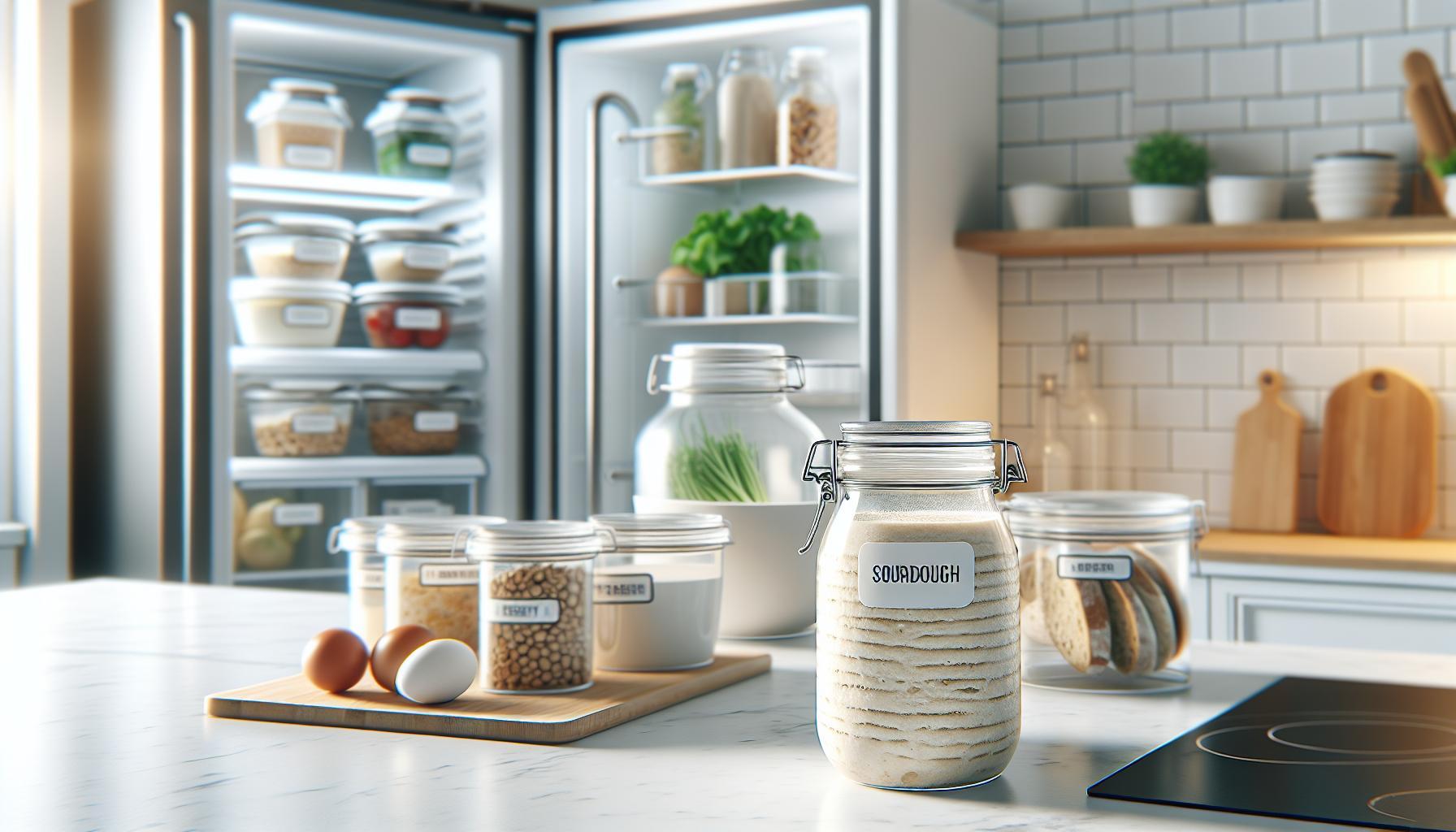
To maximize the lifespan of your starter in the fridge, keep it in an airtight container. This prevents it from drying out and protects it from absorbing any unwanted odors from the fridge. When you store your starter, it’s a good idea to give it a feeding before refrigerating. After feeding, let it sit out at room temperature for about 2-4 hours until it bubbles and shows signs of activity before you seal it in the fridge. This allows the yeasts to become active and can help maintain its vitality.
While your starter can last a month or more, it will require feeding at least once every two to three weeks to keep its strength intact. If you forget to feed it and notice a layer of liquid (commonly called “hooch”) on top, it’s a sign that your starter is hungry. You can simply pour off the hooch, revive the starter with a feed, and give it some time at room temperature to reactivate before using it for baking. Proper storage and regular maintenance are key to ensuring that your sourdough starter will be ready when you’re ready to bake.
Understanding Sourdough Starter Life Cycle
A sourdough starter is a living culture of flour and water that uses wild yeast and bacteria to ferment and rise bread. Understanding its life cycle is essential for maintaining its vigor and ensuring you can bake fresh bread whenever you desire. A healthy sourdough starter goes through distinct phases: mixing, feeding, rising, and resting, each critical to its effectiveness in baking.
When you first create your starter, the mixing phase sets the stage for microbial growth. This initial combination of flour and water encourages the natural yeast and bacteria present in the flour and environment to flourish. As you feed the starter-generally every 12 to 24 hours, depending on whether it’s kept at room temperature or in the fridge-the yeast population increases substantially. This feeding is crucial because it provides fresh sugars for the yeast, promotes acetic and lactic acid production from the bacteria, and creates the distinctive sour flavor that characterizes sourdough.
Once your starter reaches its peak activity, it rises beautifully, filled with bubbles that signify a healthy fermentation process. This rise typically occurs within a few hours of feeding, revealing the starter’s readiness for baking. However, if left unfed for too long, the yeast’s activity begins to drop, leading to a build-up of byproducts, such as hooch, which indicates hunger. Proper timing in this cycle is paramount; understanding when your starter is at its peak will maximize the potential for delicious bread.
For optimal health, when storing in the fridge, it’s important to allow the starter to rest after feeding. After about 2-4 hours at room temperature, it should be refrigerated in an airtight container to slow down its activity. Regular monitoring of its consistency and smell will help you gauge its well-being. If you can balance the feeding schedule with your baking frequency, your sourdough starter can remain a reliable companion in your baking adventures for months. By adhering to these guidelines, you ensure your starter is always prepared to rise to the occasion, delivering tasty, artisanal sourdough bread whenever you desire.
Optimal Storage Conditions for Sourdough Starter
To ensure your sourdough starter thrives in the fridge and remains usable for baking, it is crucial to establish optimal storage conditions. Refrigeration slows down the fermentation process, meaning your starter can survive longer periods without frequent feedings, typically up to two weeks. However, with the right techniques, you can extend its life even further.
After you’ve fed your starter, allow it to sit at room temperature for about 2-4 hours. This resting period enables the yeast and bacteria to become active again and build a robust population before it is cooled. Once this time has passed, transfer your starter to an airtight container. A glass jar with a lid works well, as it prevents moisture loss and keeps your culture secure. Make sure to leave some space at the top of the jar, as the starter may still expand slightly in the fridge.
Regularly check your starter’s condition when using the fridge for storage. It’s normal for liquid, often called “hooch,” to develop on the surface after a week or two. This indicates that your starter is hungry. Before using it, you can pour off the hooch if desired, but this liquid is safe and can be mixed back in. If your starter develops an off-putting smell or has visible mold, it’s best to discard it to avoid potential health risks.
For those who bake less frequently, consider adopting a feeding schedule that aligns with your baking plans. If you’re planning to bake weekly, feed your starter once a week in the refrigerator, allowing it to rest outside for a few hours after feeding. If you need to store it longer-up to a month-you can freeze your starter. Just remember to revive it gradually by thawing in the fridge for about 24 hours before resuming your regular feeding schedule.
By adhering to these guidelines, you’ll help your sourdough starter remain robust and ready for all your baking endeavors, ensuring delicious results every time.
Signs Your Sourdough Starter Has Gone Bad
In the world of sourdough baking, a healthy starter is your best friend. However, it can sometimes be challenging to know when your starter has passed its prime. Recognizing the signs that your sourdough starter has gone bad is crucial for maintaining both safety and the quality of your baked goods.
The most common indication that a starter has spoiled is the presence of mold, which can appear as fuzzy patches in various colors (green, white, or black) on the surface. Mold indicates the growth of unwanted bacteria, and it’s safest to discard the entire starter if you notice it. Additionally, a strong, off-putting smell, reminiscent of rotting or decay, signals that harmful microorganisms may have taken over. A healthy starter usually emits a tangy, pleasant aroma due to the presence of lactic acid bacteria. If your starter smells overwhelmingly sour or uncooked, reconsider its safety before baking.
Another sign to watch for is a significantly changed texture. While a bubbly surface is a good indicator of a thriving starter, a dry, cracked top or an excessively thick consistency could suggest that the starter has depleted its nutrients and is no longer viable. Ensure that your starter is actively bubbling and has a smooth texture; if not, it may be time for a feeding or even a reset.
Lastly, if you’ve been storing your starter in the fridge for an extended period-beyond two weeks-without feeding, it’s essential to perform a “smell test” and look for signs of life. If there’s no bubbling action upon feeding and it remains flat or inactive after several hours, the starter might have fully exhausted itself. It’s advisable to return to fresh flour and water and start a new culture if this occurs. Being attentive to these signs ensures that your sourdough starter remains a reliable companion in your baking adventures.
Reviving Old Sourdough Starter: A Step-by-Step Guide
To revive an old sourdough starter that has been stored in the fridge, follow these simple yet effective steps to bring it back to life. Sourdough starters can often become sluggish after being neglected, but with a little care, they can regain their bubbly vigor, ready for your baking adventures.
Start by assessing your starter. If it has been in the fridge for more than two weeks without feeding, it’s essential to check for any signs of spoilage such as mold, an off-putting smell, or unusual texture. If everything looks normal, you can begin the revival process.
Begin by removing your starter from the fridge and bringing it to room temperature. Let it sit for about 30 minutes. This slight warmth will stimulate the dormant yeast and bacteria within. Next, discard about half of the starter (typically, around 50 grams) to reduce its density and provide fresh nutrients for the active culture. Add equal parts by weight of flour and water-typically, 50 grams of each. Mix thoroughly until you have a smooth and lump-free batter, as this encourages incorporation of air and a healthy fermentation process.
Once you’ve mixed in the fresh flour and water, cover the container loosely with a lid or cloth to allow gases to escape while preventing contaminants from entering. Place your mixture in a warm spot, ideally around 75°F to 85°F (24°C to 29°C), which is optimal for yeast activity. After about 8-12 hours, you should start to see bubbles forming, and your starter will have a pleasant, tangy aroma. If you don’t see any signs of life after this period, consider repeating the feed process once or twice more over the next couple of days.
Once your starter is bubbly and has doubled in size within a few hours of feeding, it’s ready to be used in baking. Be sure to keep feeding it regularly, typically every 24 hours if kept at room temperature, or once a week if stored in the fridge, to maintain its health. Reviving an old starter can be incredibly rewarding, offering a deeper connection to the sourdough baking process while bringing failed cultures back into action.
Comparison: Fridge Storage vs. Countertop Storage
Storing sourdough starter properly is crucial for maintaining its health and viability. When deciding between fridge storage and countertop storage, understanding the nuances of each method can significantly influence your baking routine and the longevity of your starter.
Fridge storage is favored for those who bake less frequently. When kept in the refrigerator, your sourdough starter can last up to several weeks without feeding, making it a hassle-free option. The cold environment slows down yeast activity and metabolism, allowing the starter to remain viable with minimal maintenance. However, it’s essential to remember that while this method prolongs life, it can also lead to a less active culture over time, requiring a few feedings to reawaken the starter before baking.
On the other hand, storing your starter on the countertop creates a vibrant, highly active culture perfect for regular baking. This method requires daily feedings, which encourages stronger yeast growth and fermentation. Starters kept at room temperature are typically bubbly and ready for action more quickly than their refrigerated counterparts, so if you bake often, this could be an advantageous choice. However, this approach necessitates a more hands-on commitment to keeping your starter healthy and robust.
Ultimately, the decision between fridge storage and countertop storage hinges on your baking frequency and lifestyle. If you’re baking daily or every few days, keep your starter at room temperature and feed it regularly. Conversely, for occasional bakers, fridge storage allows you to maintain a starter with minimal fuss, just ensuring that you revive it adequately before use. Understanding these dynamics empowers you to choose the best strategy for your baking needs while keeping your sourdough starter healthy and thriving.
How Often to Feed Your Sourdough Starter
Feeding your sourdough starter regularly is crucial for maintaining its health and effectiveness in baking. Understanding your starter’s feeding schedule can enhance its robustness and ensure it remains active and ready for use whenever you need it. When stored in the fridge, a sourdough starter can typically last up to two to three weeks without feeding, thanks to the reduced metabolic activity in the cold. However, just because you can extend the time between feedings doesn’t mean you should skip them completely; rejuvenating your starter with regular feedings is still essential for optimal performance.
For those who keep their starter in the refrigerator, a general recommendation is to feed it about once a week if you’re not using it for baking. This helps to sustain the starter’s yeast and bacteria, ensuring it doesn’t become sluggish or develop off-flavors. When you decide to bake, it’s advisable to take your sourdough starter out of the fridge at least 24 hours in advance. Begin by discarding a portion (usually half), then feed it with equal parts flour and water by weight. This feeding process essentially reawakens your starter, allowing it to regain its vitality and rise effectively.
Conversely, if you prefer to store your sourdough starter at room temperature to maintain a consistently active culture, daily feedings are recommended. This routine involves discarding a portion of the starter and replenishing it with fresh flour and water, which nurtures a thriving environment for your yeast and bacteria. An active room-temperature starter will produce bubbles and have a pleasant, tangy aroma, indicating it’s well-fed and ready to rise dough.
To simplify your feeding routine, consider adopting a schedule like the following:
| Storage Method | Feeding Frequency |
|---|---|
| Refrigerator | Once a week |
| Countertop | Daily |
Maintaining consistency in your feeding schedule will not only keep your sourdough starter healthy but also ensure that you can bake delicious bread or other sourdough-based recipes any time you choose. Whether stored in the fridge or on the countertop, a well-fed starter is your best ally in the pursuit of perfect sourdough bread.
The Effects of Temperature on Starter Viability
The temperature at which you store your sourdough starter has a profound impact on its viability and activity levels. Colder environments, such as your refrigerator, slow down the yeast and bacterial activity significantly, allowing your starter to stay relatively dormant yet viable for extended periods. In fact, at refrigerator temperatures (around 35°F to 40°F or 1°C to 4°C), a sourdough starter can last up to two to three weeks without any feeding. This is particularly beneficial for bakers who may not use their starter daily but want to maintain it for occasional baking.
Conversely, storing your starter at room temperature fosters a more vigorous and active culture. The ideal room temperature for sourdough starters is typically between 70°F to 75°F (21°C to 24°C), where yeast and bacteria thrive. In such conditions, your starter requires daily feedings to replenish its nutrients, as the metabolic activity is significantly increased. If neglected, a room-temperature starter may quickly become sluggish or develop off-flavors. Therefore, understanding your storage method is essential in planning your baking schedule.
To illustrate the effects of temperature, consider the following:
- Refrigerated Starter: Feed every week; lasts 2-3 weeks without feeding.
- Room Temperature Starter: Requires daily feedings; best for frequent baking.
Understanding the delicate balance between temperature and feeding frequency is critical for bakers looking to maximize the efficiency of their sourdough starter while minimizing food waste. By maintaining optimal conditions, whether in the fridge or on the countertop, you’ll ensure that your starter remains healthy, ready for baking, and capable of producing consistently delicious sourdough bread.
Tips for Long-Term Storage of Sourdough Starter
Storing sourdough starter properly is essential for maximizing its longevity and ensuring its vitality. One of the most effective ways to keep a sourdough starter for the long term is refrigeration, which significantly slows down microbial activity while preserving the culture’s integrity. To maximize the life of your starter in the fridge, consider implementing these practical tips.
First, always store your starter in an airtight container. This prevents contaminants from entering and helps keep moisture in, which is vital for the yeast and bacteria to remain active. A glass jar with a tight lid or a food-safe plastic container works well. When you are ready to use your starter, give it a good stir and check for any signs of separation, which is normal and can be fixed with a feeding.
Regular Feeding Schedule
Even in the fridge, your sourdough starter can benefit from regular feedings. Aim to feed it at least once every week, even if you’re not planning to bake. When feeding, remove your starter from the fridge and allow it to come to room temperature for about an hour before adding equal parts flour and water by weight. This feeding process helps refresh the yeast and bacteria, keeping your starter strong and ready for use at a moment’s notice.
Assessing Starter Health
Before using your refrigerated starter, it’s crucial to check its condition. Look for signs of health, such as a bubbly surface and a pleasant, slightly tangy smell. If you notice a layer of liquid on top (often called “hooch”), it’s an indication that your starter is hungry. This can be mixed back in or poured off, depending on your preference. If your starter has developed any off smells, discoloration, or mold, it’s best to discard it and regenerate a new culture.
Long-Term Options
For those who don’t plan to bake frequently, consider drying or freezing a portion of your starter as a backup. To dry, spread a thin layer of starter on a piece of parchment paper and let it sit at room temperature until completely dry, then store it in an airtight container. For freezing, pour small amounts of starter into ice cube trays, freeze, and then transfer the cubes to a freezer-safe bag. Both methods allow you to revive your starter by rehydrating or thawing it when you want to bake again.
By following these tips, your sourdough starter will remain viable and ready for your next baking adventure, allowing you to enjoy fresh, homemade sourdough bread whenever you desire.
Baking with Sourdough Starter: Timing Matters
Baking with sourdough starter is not only a culinary art but also a precise science; timing plays a crucial role in the process. When you’re ready to bake, understanding the right moment to use your refrigerated starter can significantly impact the quality of your bread. The ideal time to bake is when your starter is highly active and bubbly, typically a few hours after feeding. This ensures that the yeasts and bacteria are primed to give the dough the rise and flavor that sourdough is beloved for.
To maximize the performance of your sourdough starter, remove it from the fridge and let it sit at room temperature for about an hour before you feed it. This step is essential because it allows the starter to awaken from its dormant state. Once it’s at room temperature, feed it with equal parts flour and water by weight. After another 4 to 8 hours, once your starter has doubled in size and exhibits a nice bubbly texture, it’s ready for baking. This timing adjustment not only enhances the starter’s potency but also builds complexity in flavor.
Another critical aspect of timing is the fermentation period. After mixing your ingredients, allow your dough to rise for several hours, typically 4 to 8 hours depending on the temperature of your kitchen. A longer fermentation allows for more flavor development and improved texture. As a general rule, keep an eye on the dough rather than adhering strictly to time; it should double in size and feel light and airy to the touch.
Lastly, consider the dough’s final proofing time before baking. Depending on the ambient temperature, this can range from 30 minutes to a few hours. Under-proofing can lead to dense bread, while over-proofing can cause the dough to collapse. The key is to assess the dough visually and by touch; it should spring back when gently poked. This careful management of timing at each stage of the sourdough process ultimately results in a loaf that is not only delicious but also beautifully textured.
By mastering these baking timings with your sourdough starter, you can enhance your artisanal bread-making skills and enjoy the fruits of your labor, fresh from your oven.
Common Misconceptions About Sourdough Starter Lifespan
Many enthusiasts entering the world of sourdough often harbor misconceptions about the lifespan and care of their sourdough starter. One common myth is that a sourdough starter can only last a couple of weeks in the fridge. In reality, with proper care, a well-maintained starter can live indefinitely in the cold environment of your refrigerator. While it’s true that it might become sluggish after long periods without feeding, reactivating it simply requires some TLC. Most starters can easily survive a few months without any issues, provided they are fed every couple of weeks and stored correctly.
Another prevalent belief is that if a starter develops a layer of liquid on top-often referred to as “hooch”-it’s gone bad and should be discarded. While this sight can be off-putting, hooch is actually a sign that your starter is hungry. It can be stirred back into the mixture or drained off before feeding the starter with fresh flour and water. This process allows the starter to rejuvenate and regain its activity. Moreover, a change in color or texture does not necessarily indicate spoilage; often, a starter simply needs to be fed to bring it back to its optimal state.
It’s also important to address the misconception that sourdough starters require constant attention and can be overwhelming to maintain. In fact, many bakers find the routine of feeding their starter both manageable and rewarding. A starter kept in the fridge only needs feeding about once every week or two, making it suitable for those with busy schedules. By ensuring your starter is fed, properly sealed to avoid contamination, and stored in a stable environment, you can confidently enjoy baking with it for years to come.
Finally, understanding that some variation in sourdough starter performance is normal can help demystify the process. Different starters may behave uniquely based on their composition and environment. If your starter seems less bubbly or rises more slowly than usual, don’t panic! It may just need more frequent feedings or a bit longer to adapt after being pulled from the fridge. Embracing these small fluctuations will enhance your baking experience and deepen your understanding of sourdough fermentation, allowing you to produce delicious loaves with confidence.
Expert Tips for Maintaining a Healthy Starter
Maintaining a healthy sourdough starter is key to ensuring your baking adventures are both fruitful and enjoyable. With just a bit of attention and care, your starter can thrive and be ready whenever you want to make bread. Here are some expert tips to keep your sourdough starter vibrant and active, while extending its lifespan in the fridge.
Start by establishing a regular feeding schedule. For a refrigerator-stored starter, feeding it every 1 to 2 weeks is generally sufficient. When you feed your starter, use equal parts by weight of flour and water to maintain its hydration. This keeps the microbial activity high and ensures that your starter remains active. Be sure to avoid using highly bleached or overly processed flours, as these can inhibit the fermentation process and weaken your starter’s strength. Whole grain flours, like whole wheat or rye, are excellent choices as they contain more nutrients and can enhance fermentation.
Pay attention to the consistency of your starter. It should ideally be thick and pourable, resembling a thick pancake batter. If your starter seems too dry or thick, you can add a little more water during feeding. Conversely, if it’s too runny, you may need to incorporate more flour. This balance plays a crucial role in maintaining the health of your yeast and bacteria, providing them the right environment to thrive.
Another common issue is hooch, the dark liquid that forms on top when a starter is hungry. Instead of discarding your starter at first sight of hooch, simply stir it back in or pour it off. This is a natural occurrence that indicates your starter requires feeding. Failure to feed it regularly can lead to a decline in its yeast activity, so always make sure to schedule regular feedings, even if you are not planning to bake.
Finally, when it comes to long-term storage, if you plan on not using your starter for an extended period, consider dry storing it. Spread a thin layer of starter on a piece of parchment paper and allow it to air dry. Once dry, break it into pieces and store it in an airtight container. To revive it, simply mix it with water and flour, and follow a feeding schedule to wake it back to life. This can keep your starter viable for months without the need for regular care.
By following these straightforward tips, you can maintain a robust sourdough starter that will serve you well for baking delicious loaves whenever the craving strikes.
Frequently Asked Questions
Q: How often should I feed my sourdough starter when stored in the fridge?
A: You should feed your sourdough starter at least once a week when stored in the fridge. This helps maintain its vitality. If you plan to bake frequently, consider feeding it every 5-7 days for optimal performance[1].
Q: What is the best temperature to store sourdough starter in the fridge?
A: The best temperature to store sourdough starter in the fridge is around 40°F (4°C). This cool environment keeps the yeast and bacteria active while slowing their fermentation process, allowing the starter to last longer[2].
Q: Can sourdough starter go bad in the fridge?
A: Yes, sourdough starter can go bad in the fridge. Signs of spoilage include an off smell, discoloration, or the presence of mold. If any of these occur, it’s best to discard the starter and create a new one[3].
Q: How long can I keep an unfed sourdough starter in the fridge?
A: An unfed sourdough starter can be kept in the fridge for about 2 to 3 weeks. After this period, it may become less viable for baking, so it’s recommended to feed it regularly to maintain its strength[2].
Q: Can I use sourdough starter right after taking it out of the fridge?
A: It’s best to let your sourdough starter come to room temperature and feed it before using it in baking. This ensures it’s active and ready to leaven your bread effectively[1].
Q: What should I do if my sourdough starter has a layer of liquid on top?
A: A layer of liquid, known as “hooch,” indicates that your starter is hungry. You can pour it off or mix it back into the starter before feeding it. This liquid is safe and can improve flavor[2].
Q: How to know if my refrigerated sourdough starter is still healthy?
A: To check the health of your refrigerated sourdough starter, look for a pleasant, tangy smell and bubbles on the surface. If it rises and falls consistently after feeding, it is likely healthy and ready for baking[3].
Q: Is it better to keep sourdough starter in the fridge or at room temperature?
A: Keeping your sourdough starter in the fridge is better for long-term storage due to slower fermentation; however, if you bake frequently, maintaining it at room temperature with regular feedings may yield better results for immediate use[1].
Insights and Conclusions
Now that you know how long sourdough starter can last in the fridge, it’s time to put that knowledge to good use! Remember, maintaining your starter properly ensures you can bake delicious, homemade bread anytime. If you’re eager to dive deeper, check out our guides on perfecting your sourdough technique or learn how to create your own starter from scratch to optimize your baking experience.
Feeling inspired? Don’t wait-revitalize your starter this week and enjoy the rich flavors of fresh sourdough. Got questions or tips to share? We’d love to hear from you in the comments! For more insider tips and exclusive recipes, consider subscribing to our newsletter. Your next baking adventure is just around the corner! Explore more about sourdough baking here and check out our beginner’s guide here. Happy baking!